“The dynamic process of integrating art and science:” Art Restoration and Culture With Sofia Piliero (‘23)

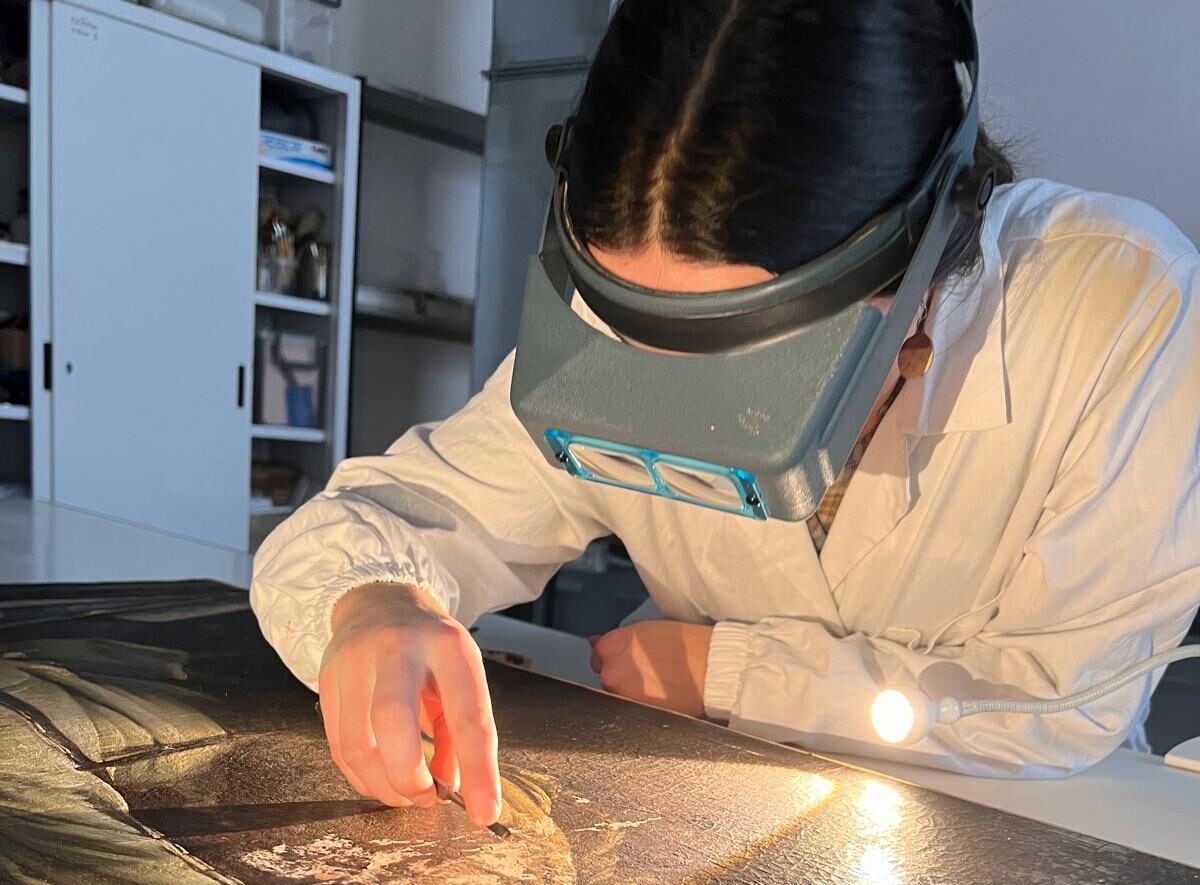
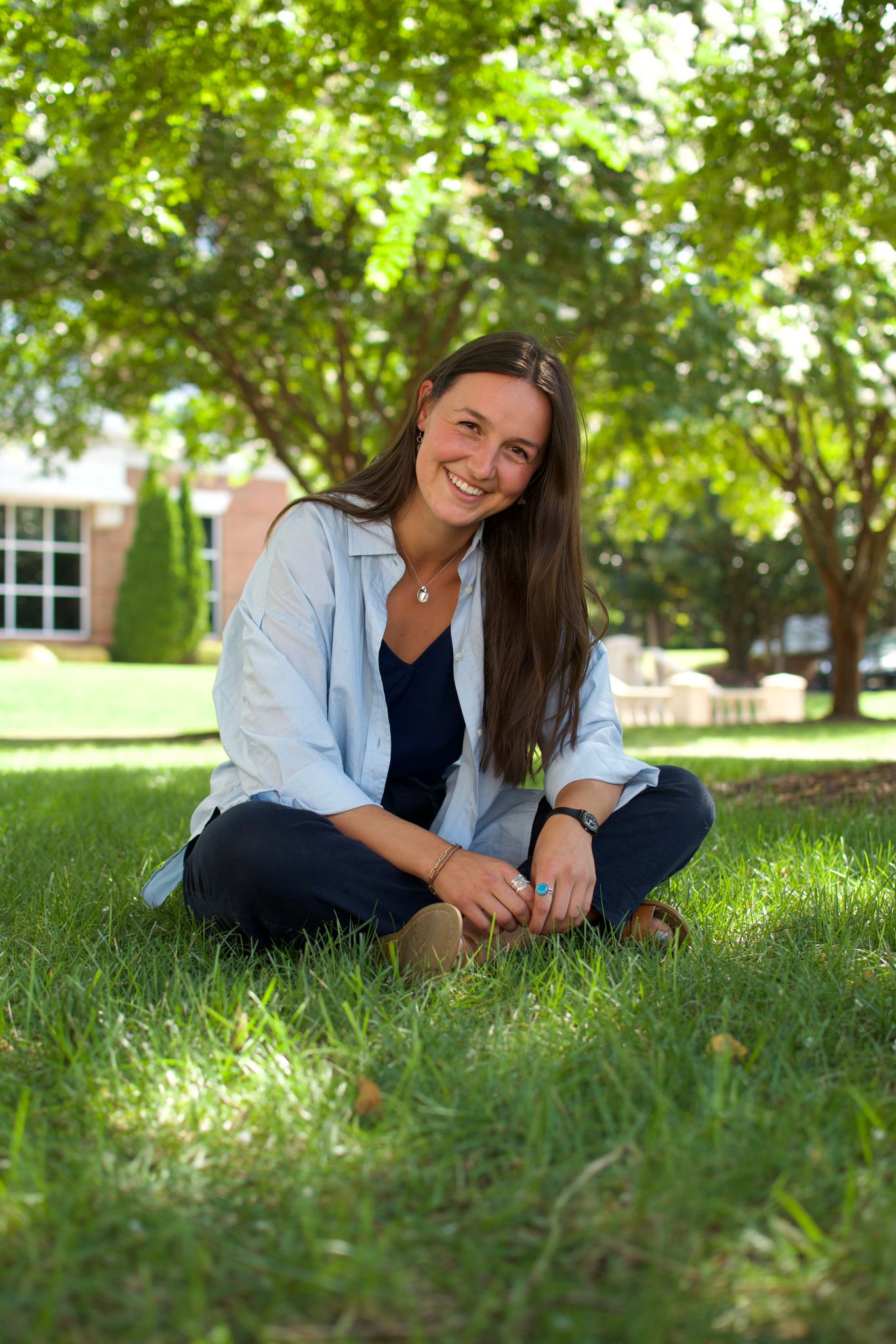
After graduating from Wyoming Catholic College in the Class of ‘23, Sofia Piliero had the opportunity to travel to Italy. There she studied art restoration and conservation through the Istituto Lorenzo de’ Medici, where she received a Professional Certificate in Art Restoration and Conservation. This two-year degree in the international practice of fine art conservation included technical, ethical, and historic considerations that impact every restoration intervention. Once her studies were completed, Sofia returned to the US, and is currently based in Colorado working for a private restoration studio. “Now, my work ranges from fine art to folk art, family heirlooms and antiques. The pieces that I find particularly compelling are ones that hold personal stories and family history. Every day’s work consists of preserving the past for the future and restoring the world, one piece at a time.”
When I was senior in high school, I planned to study art conservation for my undergraduate degree at another university but my experience at WCC’s Founders’ Scholarship Competition changed my mind,” Sofia shared. Attending seminars and conversing with students and faculty, she realized that if she wanted to pursue art restoration, WCC would give her the foundation to make that career meaningful. “A background in the liberal arts has provided me with invaluable context to understand the pieces I have worked on in their historical moment.”

Sofia first learned that art restoration was a career when she was about fourteen years old and it became her dream. It’s a field that intersects art, archaeology, art history, and chemistry. Working as an art conservator demands both innovative creativity and precise analysis. “I enjoy the dynamic process of integrating art and science,” she says.

At Wyoming Catholic College, Sofia became immersed in the whole context for western art. She comments: “I am forever indebted to the arts curriculum at WCC. Studying under professors like Dr. Jeremy Holmes provided an enriching encounter with the arts. Although limited, it was a wonderful introduction to art history that went far deeper than mere familiarity with dates, artists, and pieces but actually explored the cultural atmosphere in which these works were created.” Sofia comes from a family of artists and visual art, including sacred art, has always had a place in her surroundings.
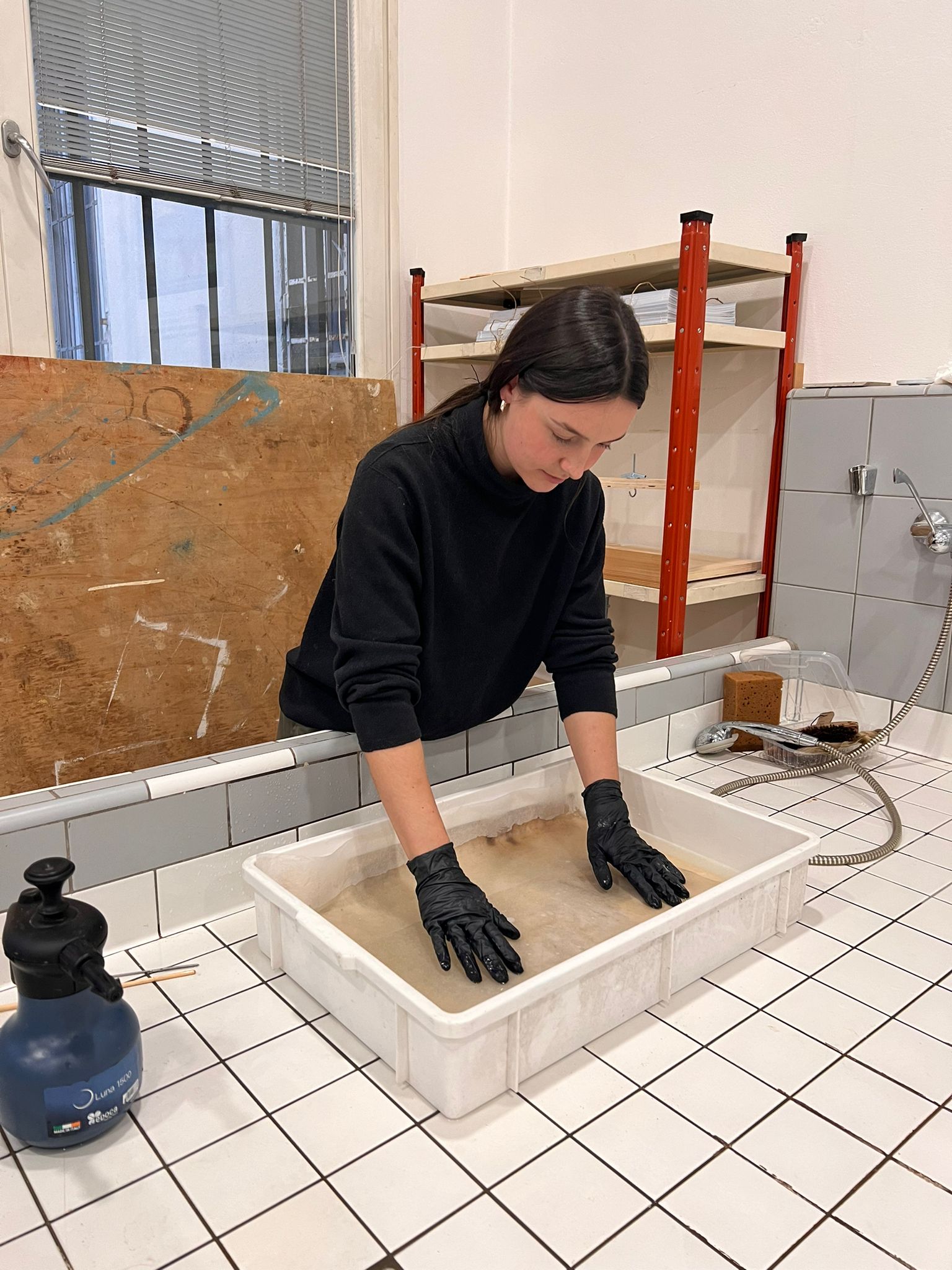
In Florence, Sofia’s course of studies covered a variety of mediums with an emphasis on canvas paintings, frescoes, polychrome wooden statues, and archeological ceramics, as well as an introductory course in paper conservation. “These classes focused on hands-on work which was paired with courses in chemistry, art history, and the ethical guidelines of art conservation,” she recounted. “This field is a fascinating intersection of art and science, because restoration depends on a molecular understanding of the original artwork.” Encountering a centuries-old piece of art, the conservator is emphatically faced with the human experience of holding the past and shaping the future. Time can’t be unraveled, and “although the temptation to peel back layers of the patina to reveal the work at its moment of artistic conception certainly exists,” ethical conservation respects the evidence of the lifetime of a work of art and focuses on minimal intervention with an emphasis on preservation.

When I was considering where to study art conservation, it quickly became clear that a program in Italy would provide opportunities for experiential education on real artwork that were not available in the States.” There were many unknowns as Sofia attempted to communicate with the Italian university and sort through the visa application but once she arrived in Florence, everything fell into place. “The two years I spent there were a worthy investment in the rich field of art conservation as well as in the personal transformation that time spent in another country provides.”
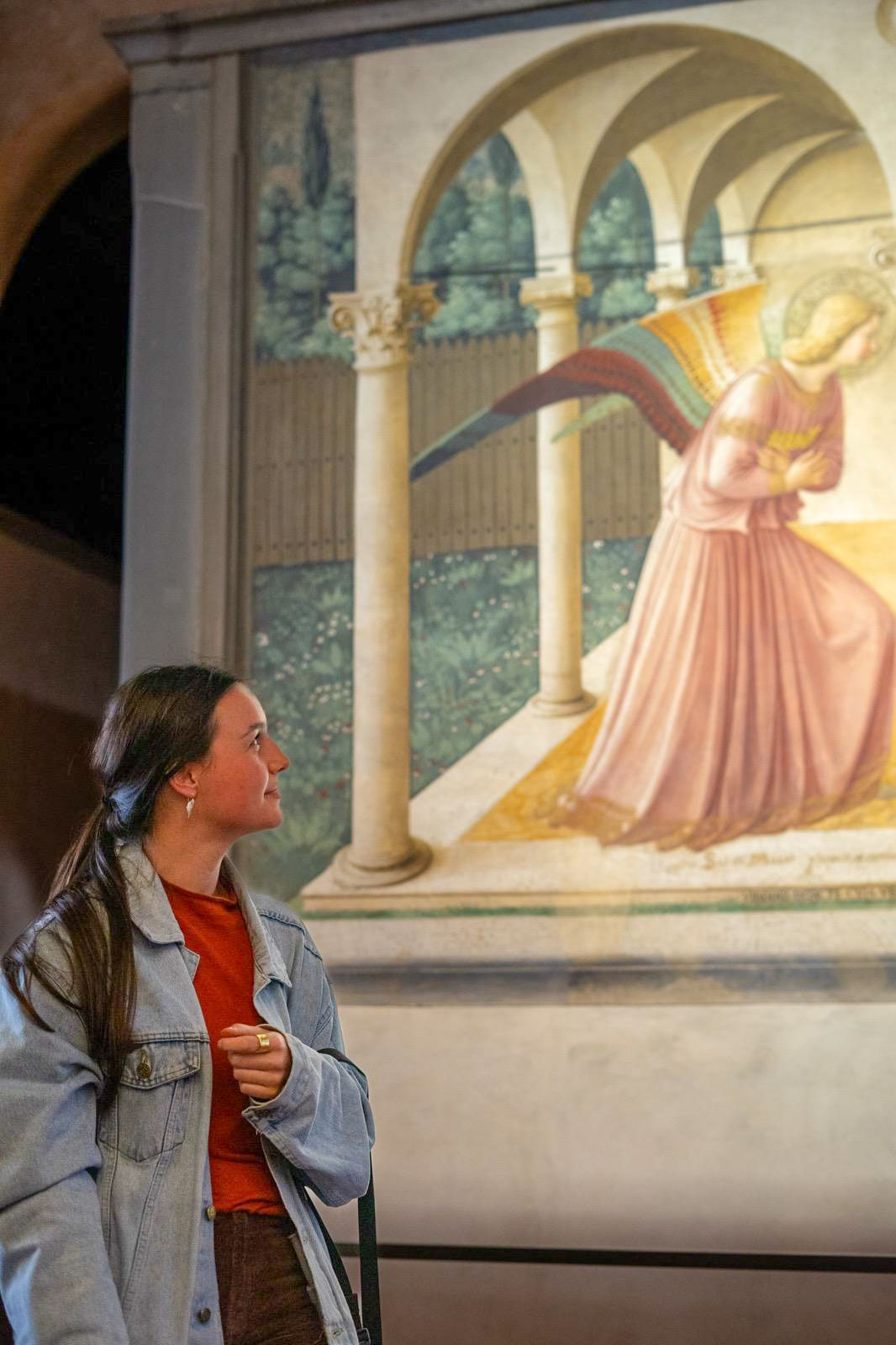
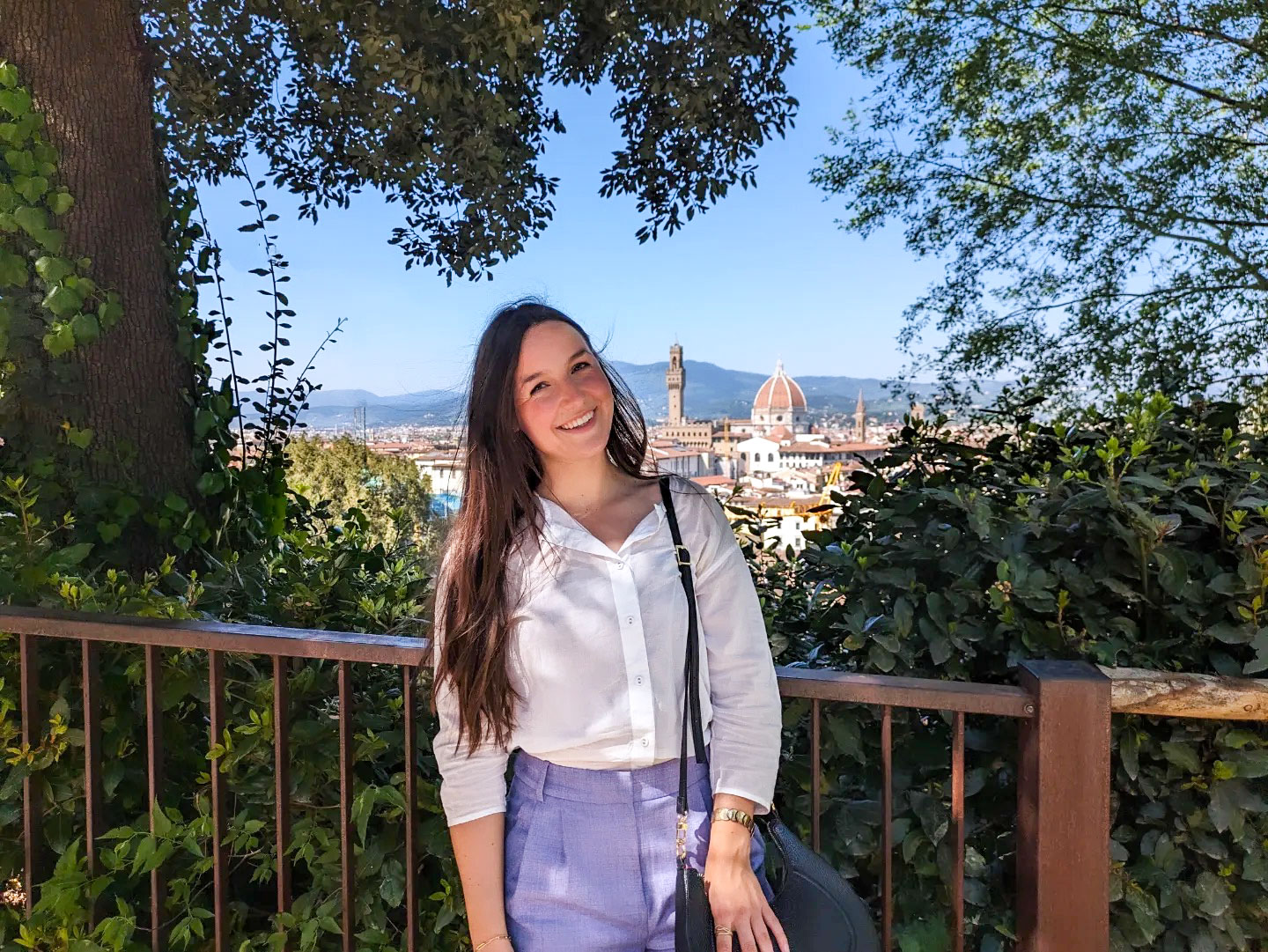
Learning Italian and immersing herself in the tempo of a Florentine day continually brought her into contact with the art, literature, and architecture that had colored so much of her undergraduate education. Street signs with quotes from Dante’s Commedia were an “everyday sight,” a wall with Michelangelo’s youthful graffitti was on her commute to school, and of course, Brunellschi’s magnificent duomo was the first landmark on which she relied as she learned her way around the city. “One of my favorite things about life in Florence was how personal the city felt,” Sofia comments. “Historic characters, personalities, relationships, politics, and family dynamics shape the architecture of the city far more than any considerations of city planning. I was mesmerized by the story of Florence and collecting stories about towers and alleyways and logge made the city come alive for me in its layers of historical significance.”

“Living in Florence gave me the great privilege of seeing these famous pieces more than once. It was a great gift to visit the Uffizi again and again. I stood in front of Michelangelo’s David with the many lovely friends and family who came to visit me. My favorite Florentine destination was the quiet halls of San Marco which hold the work of Beato Angelico, the great Dominican painter whose frescoes still breathe life and color into the simple stone cells of the monastery.” In northern Italy, the city of Ravenna was a wonderful destination to encounter Byzantine mosaics and see the invention of flying buttresses supporting the cathedral of San Vitale. In the south, the Archaeological Museum of Naples and the ruins of Pompeii illustrate the extraordinary continuity of human activity from 79 AD until now. 

While studying in Italy, Sofia’s class performed restoration work for the Italian State. Led by internationally renowned conservators, they worked in small teams of 5-8 people to restore 15th-18th century canvas paintings, Etruscan archaeological ceramics, and frescoes, both detached and “in situ” in Florentine palaces. “It was an opportunity to develop proficiency in a wide range of techniques as well as a chance to see the differences between working in a private studio or a state-funded museum setting.”

After graduating, Sofia returned to the States to work in a private art restoration studio based in the Rocky Mountains in Colorado. “Our work encompasses a wide range of mediums and objects. I love the daily variety and personal encounters that our small studio size promotes.” And Sofia hopes to continue to hone her skills as a conservator and, one day, would like to open her own art restoration studio. She also sees the place of sacred art in her work as essential: “The profundity of faith has inspired magnificent works of art and in turn, beautiful art can certainly move the spirit of the beholder. One powerful characteristic of visual art is that it invites the beholder to pause in contemplation creating a receptive moment that interrupts the current of everyday life. This interruption can become a space for divine encounter.”

Asked about others who might want to pursue a similar career, Sofia says that “to be an artist in any capacity or to work alongside art requires a sensitivity to the humanities that a liberal arts education will develop. The spiritual and intellectual formation that I received at WCC was an invaluable foundation. Practically, the academic rigor of my undergraduate education prepared me to excel in my higher studies. The seminar-style classes were indispensable practice in the art of synthesizing ideas and collaborating in the pursuit of a common understanding. Most importantly, WCC provides a space to develop a rich interior life from which a sensitivity to beauty arises.”


“What a privilege! What a blessing!” — President Washut Reflects on Experience at Canonization Mass of Saints Frassati and Acutis

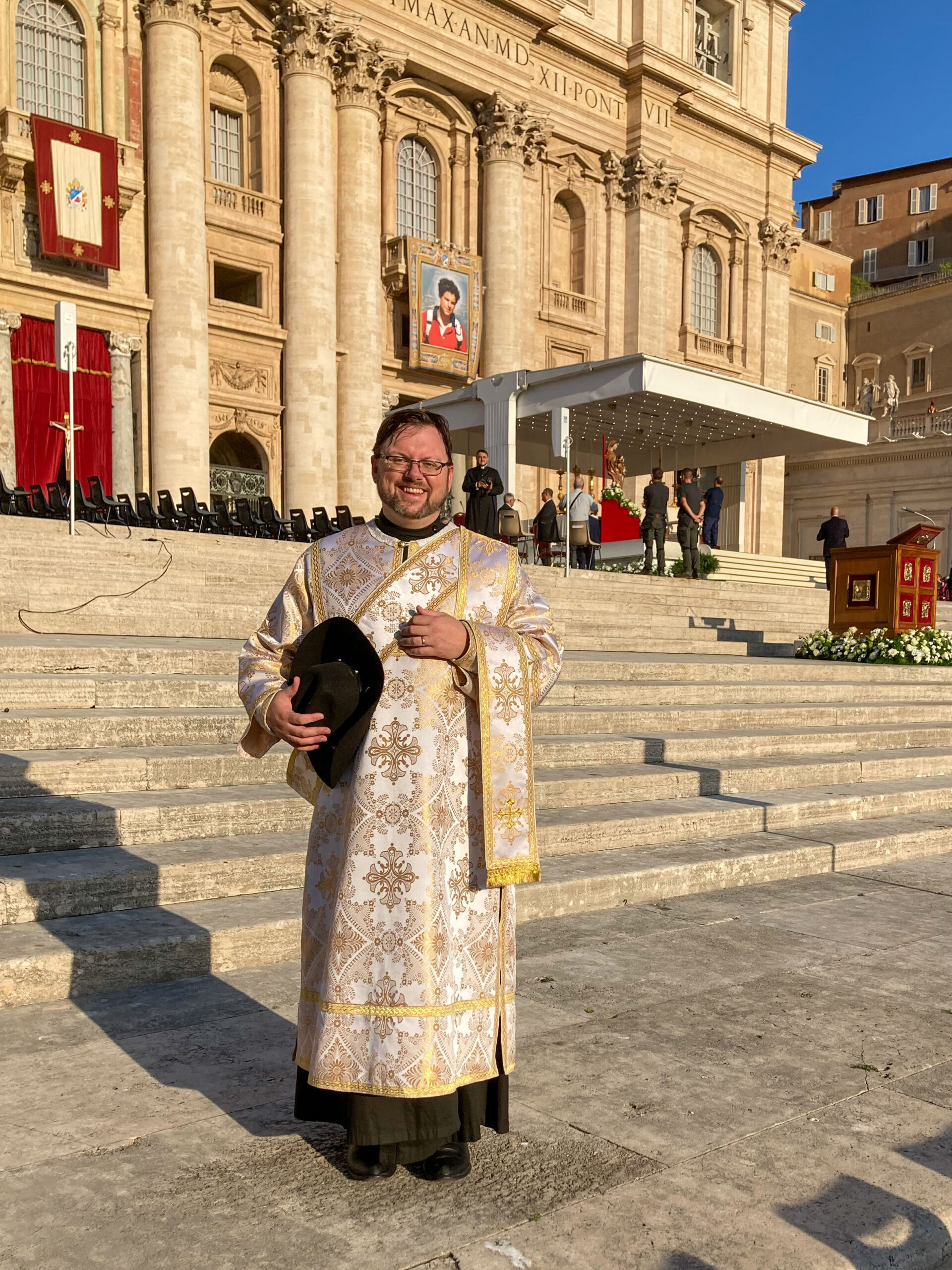
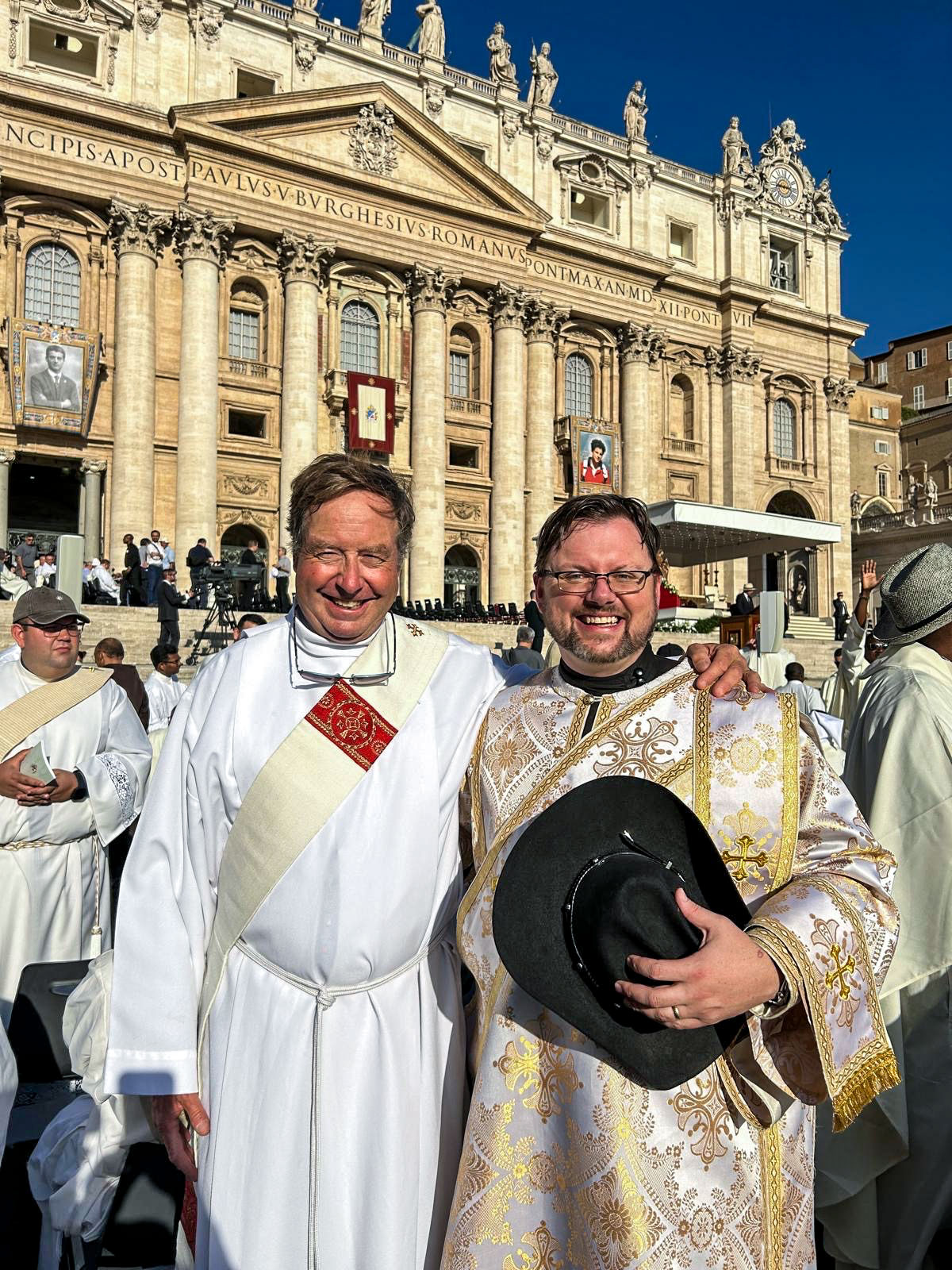
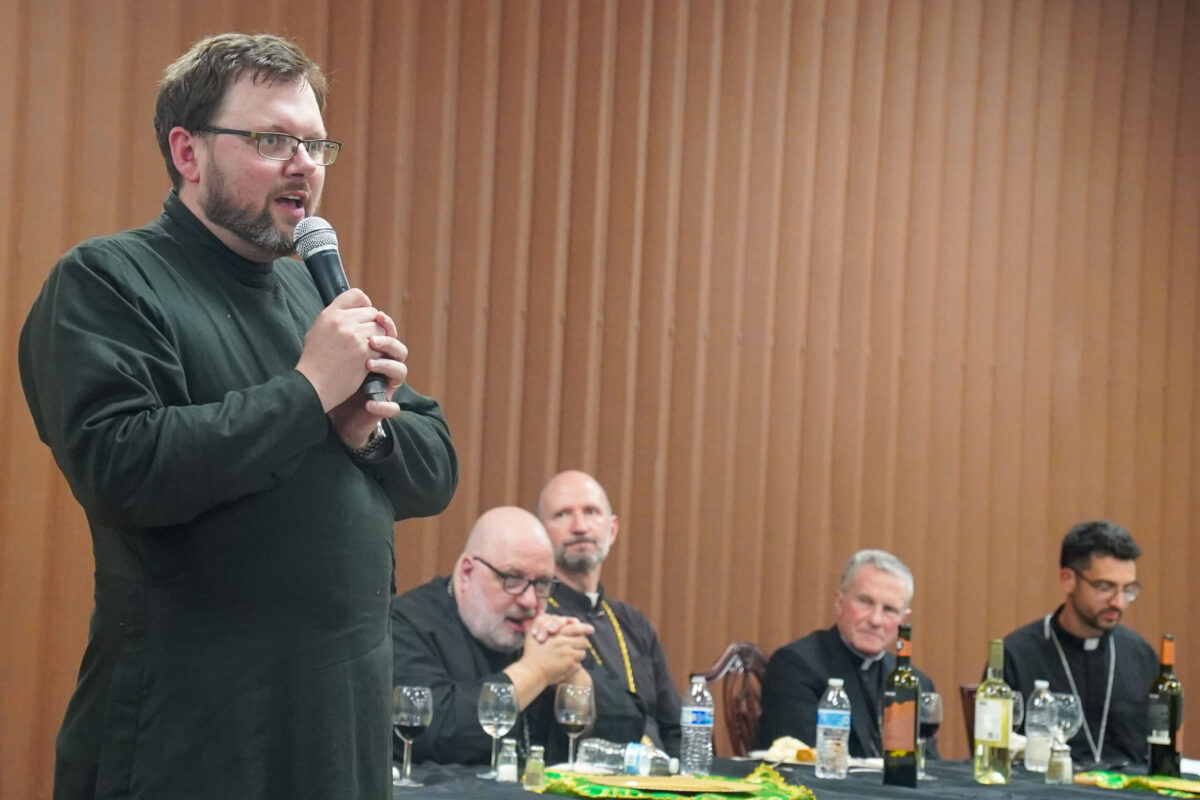
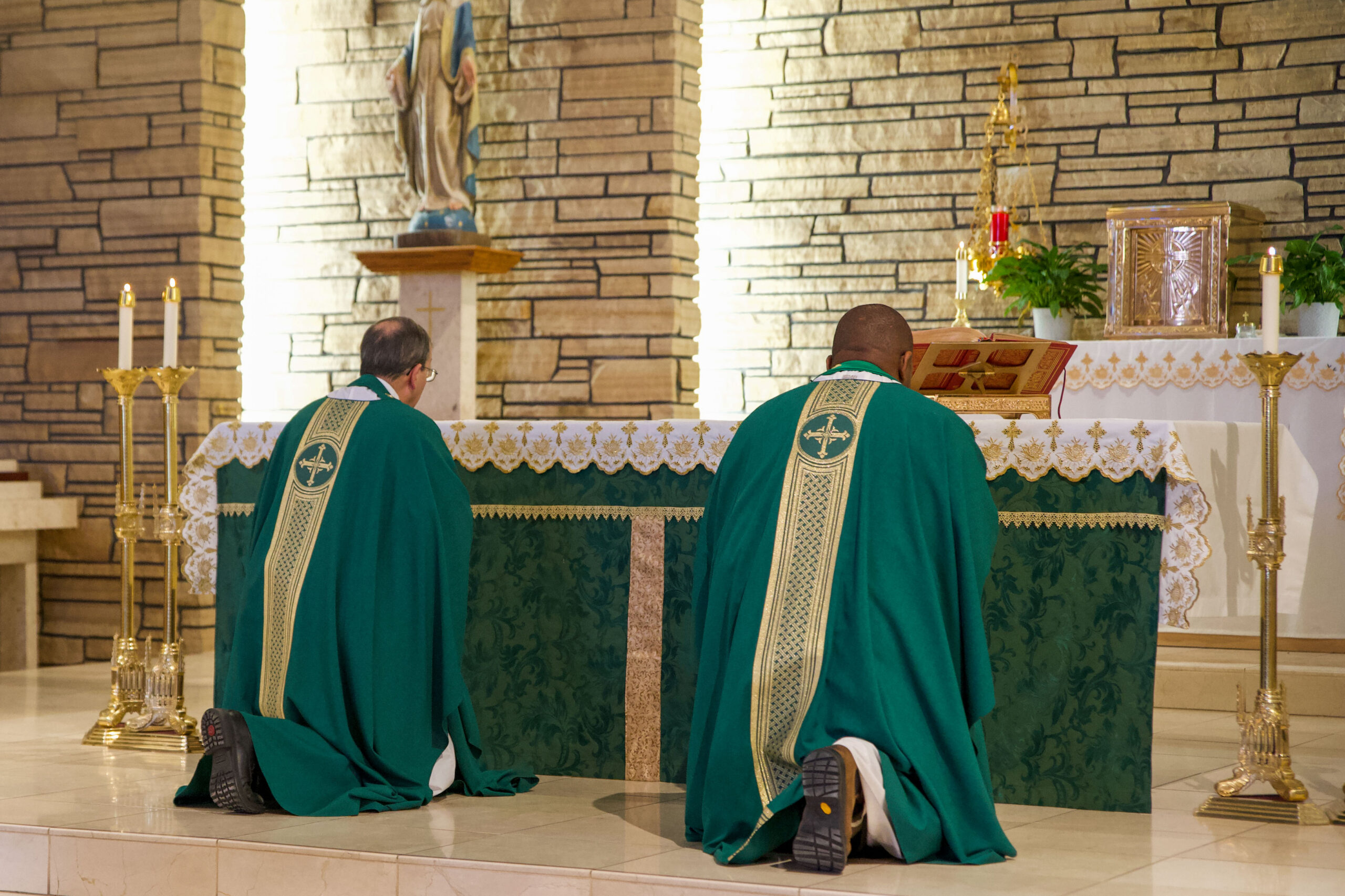
Fr. Dcn. Kyle Washut had the great honor and privilege of serving as a deacon at the canonization Mass of Saints Pier Giorgio Frassati and Carlo Acutis on Saturday, September 7th. Below, a reflection he wrote upon his return to the States.

I first encountered Pier Giorgio over twenty years ago at World Youth Day–his incorrupt body has been present at many of the festivals since Denver 1993–and over the years I have grown to admire him greatly. I admire his ardent love of the Blessed Mother, his profound devotion to the Eucharist, his desire to pursue wisdom, and the way his studies blossomed into deep friendship with his fellow students, and ultimately, with God. He was a university student who integrated his love of outdoor adventure, his deep personal friendships, his eagerness to recite poetry and his habit of bursting into song, and his desire to place the challenges of his studies within a concrete commitment to serve his neighbor and to love God. Pier Giorgio was a man of grit and grace; a young man willing to step outside the norm and pursue authentic greatness with every fiber of his being.

My love for Pier Giorgio has only increased as I have worked at Wyoming Catholic College, as the formation we offer helps our students to intentionally emulate this great saint. Our approach to study, to poetry, to the outdoors, spirituality, and service to the poor are all inspired by this exceptional young man. The first building that the College purchased in downtown Lander served as a student lounge and cafeteria in the early years, as well as the center where students could check out outdoor gear for their own wilderness adventures. When asked to propose a name for the building, the students chose Frassati Hall. Each year, a graduating senior is awarded the Frassati Award in honor of their outstanding work in the College’s outdoor program. And our Oratory houses a framed picture of the saint along with a second-class relic–a gift from his niece in recognition of our exceptional love for him.

On hearing of his upcoming canonization, the College organized numerous celebrations around the event. COR Expeditions led a mountain climbing trip to the mountainous Marian shrine outside of Turin where Frassati loved to climb, I spoke to a Legatus chapter about the life and witness of the saint-to-be, and we organized the summiting of a Rocky Mountain peak on the expected day of his canonization. As spiritually fruitful as all of our celebrations were, none of them coincided with Frassati’s canonization, which Pope Leo XIV delayed until September 7, when he planned to canonize Carlo Acutis and Pier Giorgio together. While initially saddened by the delay, I’ve come to see the joint canonization as containing an important message from Pope Leo to today’s world, one which resonates clearly with WCC’s own mission.

The parallels between these two youthful Italian saints are remarkable, but I was particularly struck by Carlo Acutis’ exceptional asceticism in moderating his use of video games and the internet. He died in 2006, shortly before the smart phone emerged on the scene, but even in those days, he was intentionally restricting his video game use to less than 2-hours-per-week. For this reason, I think Carlo Acutis might well be seen as the patron saint for fasting from technology to allow for its prudent use. Leo, who is so concerned about the digital revolution of AI, canonized the “outdoor saint” alongside the “technology fast” saint, inviting the youth of the world to creatively fast from technology and enter into the wilderness as part of their renewal of holiness.

I mentioned to a friend what a profound “WCC canonization” this seemed to be, and he advised me to reach out to the Vatican to see if I could serve as a deacon for the canonization. I hadn’t even known such a request was possible, but sure enough, the Vatican allows deacons and priests from around the world to concelebrate with the Holy Father at public liturgies, and I was privileged to be among that number. Friend and WCC board member Deacon Tim Flanigan joined me on pilgrimage to the canonization, and together we served as deacons at the Mass, along with around forty others from around the world.

The night before the canonization, Dcn. Tim and I attended the Pier Giorgio Frassati Association for a prayer vigil at the Gregorian University. There, we were privileged to hold the climbing axe that Pier Giorgio wielded on his mountain excursions and that is prominently featured in the mountaintop images of him that have become so famous.

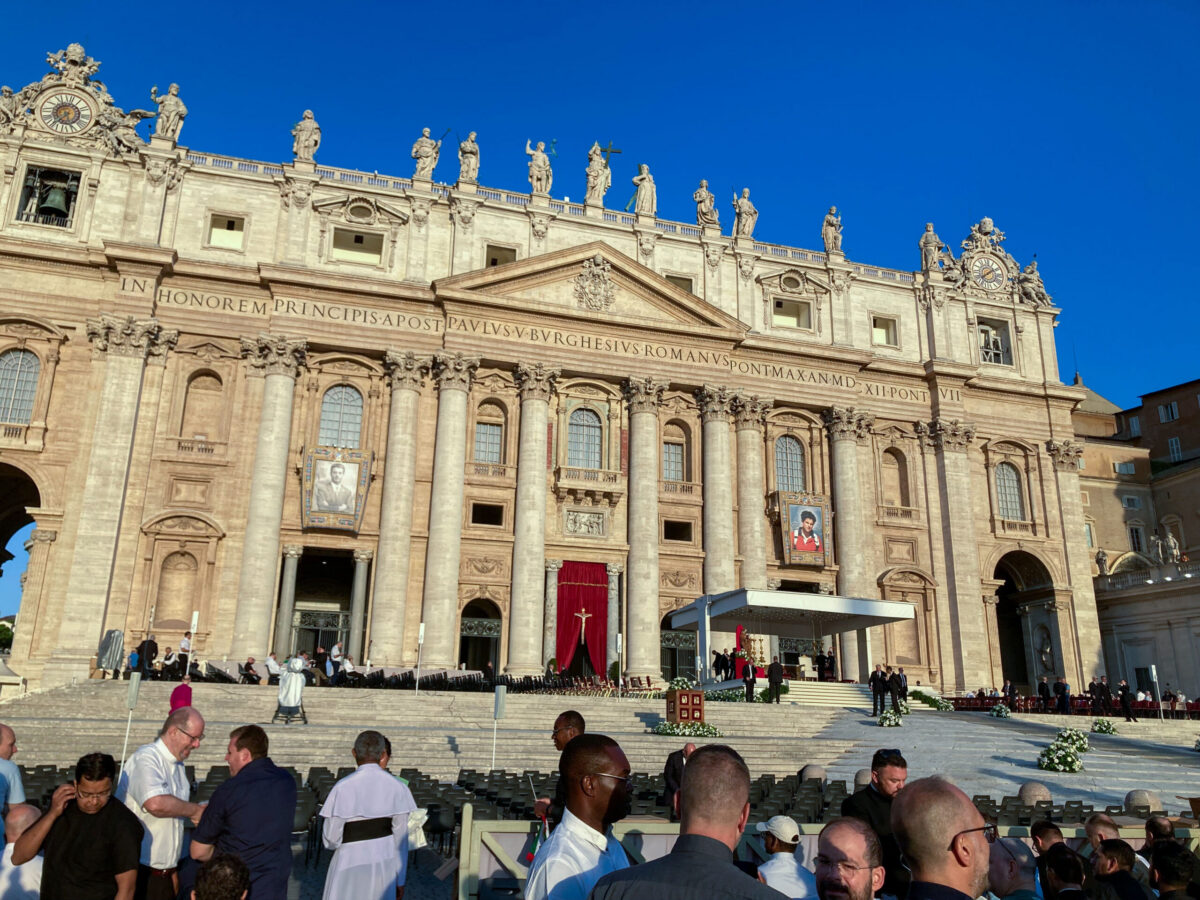
The next morning, we arrived early to St. Peter’s Square, and were invited into the very front rows; as deacons, it was our role to assist the Holy Father in the distribution of communion to such a large crowd. I was pleased to see that my friend and fellow Newman Guide College president, Msgr. Shea was concelebrating at the Mass, and we rejoiced together that after years of waiting and praying, we were privileged to see the joy of Pier Giorgio’s canonization. Pope Leo himself came out to address the crowd just before Mass, exhorting everyone to enter into the celebration of the liturgy, stressing its solemnity while radiantly proclaiming the joy of the day.

The Mass itself was beautiful. The saints’ lives were described, their sanctity proclaimed, and the entire assembly invited to invoke a solemn litany, as Pope Leo raised these two young men to the honor of the altar. Carlo’s younger brother proclaimed the first reading, giving voice to Solomon’s prayer for wisdom–a longing that is found in the heart of every young adult, for it is only through the gift of wisdom that one can fully live out one’s life as intended. The Gospel was proclaimed twice, once in Latin (by a Roman deacon), and then again, in Greek (by a Byzantine deacon), inviting each of us to take up our cross and follow our Lord. The Pope concluded his homily by referencing Pier Giorgio’s final photograph, where he is scaling the mountain and on which he wrote, “Verso L’alto”: “Saints Pier Giorgio Frassati and Carlo Acutis are an invitation to all of us, especially young people, not to squander our lives, but to direct them upwards and make them masterpieces. …to enjoy life to the full and meet the Lord in the feast of heaven.”

At the Eucharistic prayer, we deacons were each entrusted with a ciborium of hosts and a chalice of wine. We stood before the high altar and held the sacred gifts as Pope Leo consecrated them, as the Body and Blood of Our Lord became present in our hands. Then, we were sent to the priestly concelebrants, who each took from us a sacred host, intincted it in the chalice, and received the Eucharist. Afterwards, we went up into St. Peter’s to receive the Eucharist ourselves, and to purify the sacred vessels.

What a privilege! What a blessing! To serve as a deacon for the pope at the canonization of two saints whose witness is so sorely needed for the youth of today!

I pray that, through the prayers of Pier Giorgio, my work and the work of Wyoming Catholic College may serve as an oblation on the altar of the Lord, and that through our unity with the Holy Father, we can offer the saving mysteries of Christ to our students. Strengthened by what they learn and experience here, may they go forth and serve the world, transformed by the great call to holiness that they hear all the more clearly through their fasting from distraction and experiencing the Lord in the wilderness. And I can’t wait to celebrate Pier Giorgio’s first feast day as a saint this upcoming July 4, 2026. Lander is going to have quite the party!

St. Pierre Giorgio Frassati and St. Carlo Actuis, pray for us.

As New Year Begins, WCC Students Reminded That Upcoming Academic Endeavors “Need Your Attention!”

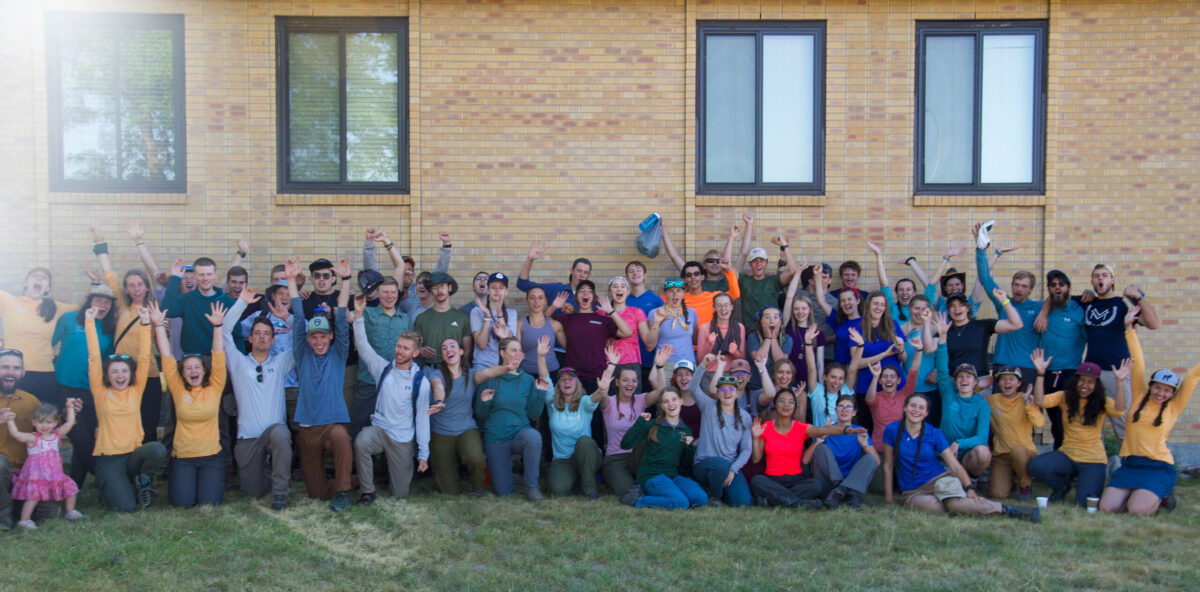
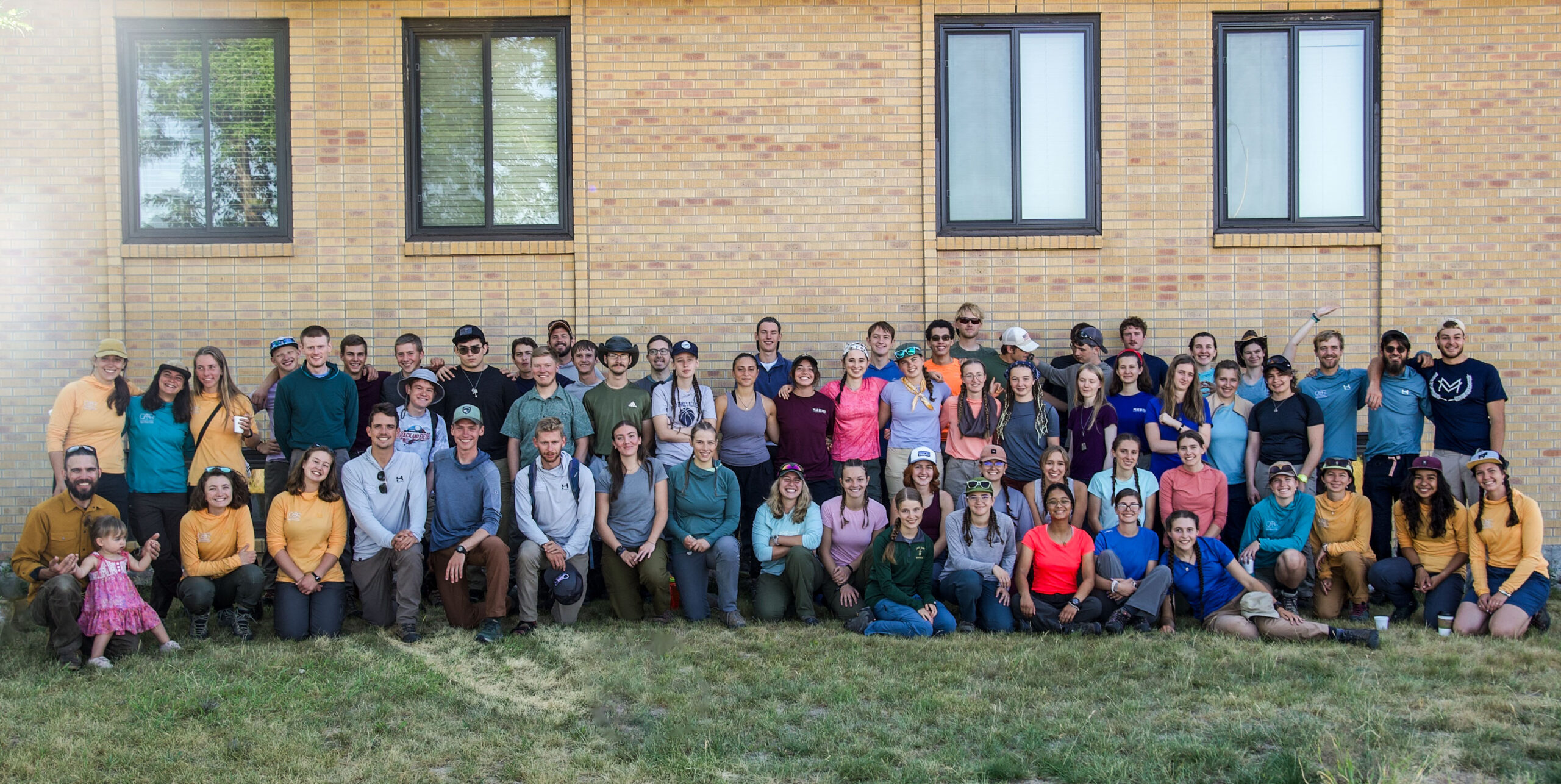
On Monday, August 25th, Wyoming Catholic College began its newest academic year as it has each fall since it opened its doors for the first time in 2007: with a Matriculation Ceremony for its newest freshman class, the Class of 2029. The morning began with the annual Convocation Mass at 8:00AM, followed by the traditional All School Photo on the steps of Holy Rosary Church. Then, the students processed back into the church for the formal Matriculation ceremony itself.

In his remarks to the assembled students and guests, Dean Scott Olsson began by reminding them that the Latin word matricula comes from the Latin word matrix, which, in its earliest meaning, means “mother.” Tracing his meaning a bit further, he remarked that when the forty-six young men and women making up the Class of 2029 signed their names in the leather-bound Matricula—the book that bears the names of every previous WCC freshman–they would be memorializing their recognition and acceptance of Wyoming Catholic as their alma mater, their new mother in the academic world they are now entering. And this meant that the newest members of the College were well and truly newborns.

Reflecting on the extraordinary power that is given to newborns, Dean Olsson spoke of Africa’s common, or “blue,” wildebeest. “Nature has given the wildebeest a marvelous power,” he said. “Within its first day, our new wildebeest friend will run as fast as 50 miles per hour. And running 50 mph is why any wildebeest can survive at all…Wildebeest have been given the power to run because that is how they survive. What in-born power, what instinct or impulse do we humans have which makes it possible for us to survive?”

“The human power is not to run. The human power is to pay attention. …A human being who cannot pay attention is like a wildebeest who cannot run. The person who can pay no attention is doomed. Students, the only thing I ask of you is that you pay attention. Your new mother needs your attention. The college does not want your attention to sell you something. It wants your attention so that you might flourish.”

Reminding them of the power of the College’s cell-phone free campus, Dean Olsson encouraged the students to go beyond the existing tech policy: “Attention is a finite resource. You only have so much of it. We need every life-saving drop of that dopamine for your Aristotle and Euclid.…social media is a waste of your time and, worse, of your attention. Let it go. If you aren’t writing a paper, leave your laptop in your room. Don’t check your email more than once a day. Agree to meet your friends without the group chat. Don’t listen to music unless you’re paying attention to it. Take breaks while you study, but when you take breaks, let your mind rest, don’t provoke it to a frenzy. Stay off the computer. Go for a walk. Sit quietly with a friend. Pray. Visit Christ in the Holy Sacrament.”

He closed his remarks with a special message to the incoming students: “Freshmen, we are delighted that you have joined us. We look forward with joy to this new kinship. May God bless your time and may God bless your attention at Wyoming Catholic College.”

After Dr. Olsson completed his opening remarks, he called each of the freshmen by name. One by one, they processed to the front of the church, signed the matricula, and shook the hand of the College’s president, Fr. Dcn. Kyle Washut. Once that formal ceremony was complete, the dean introduced the newly-matriculated class to the assembled community, who greeted them with boisterous cheers and sustained applause. Then, the Class of 2029 joined their new classmates in singing the College’s alma mater,  “Verus Conditor Montium,” for the first time as official Wyoming Catholic College students.

A recording of Dean Olsson’s remarks can be heard HERE, and Fr. Dcn. Kyle Washut’s homily from the Convocation Mass, which touched on many of the same topics as Dr. Olsson’s reflections, can be found HERE.

The Mountains Called to the Class of 2029, and They Answered

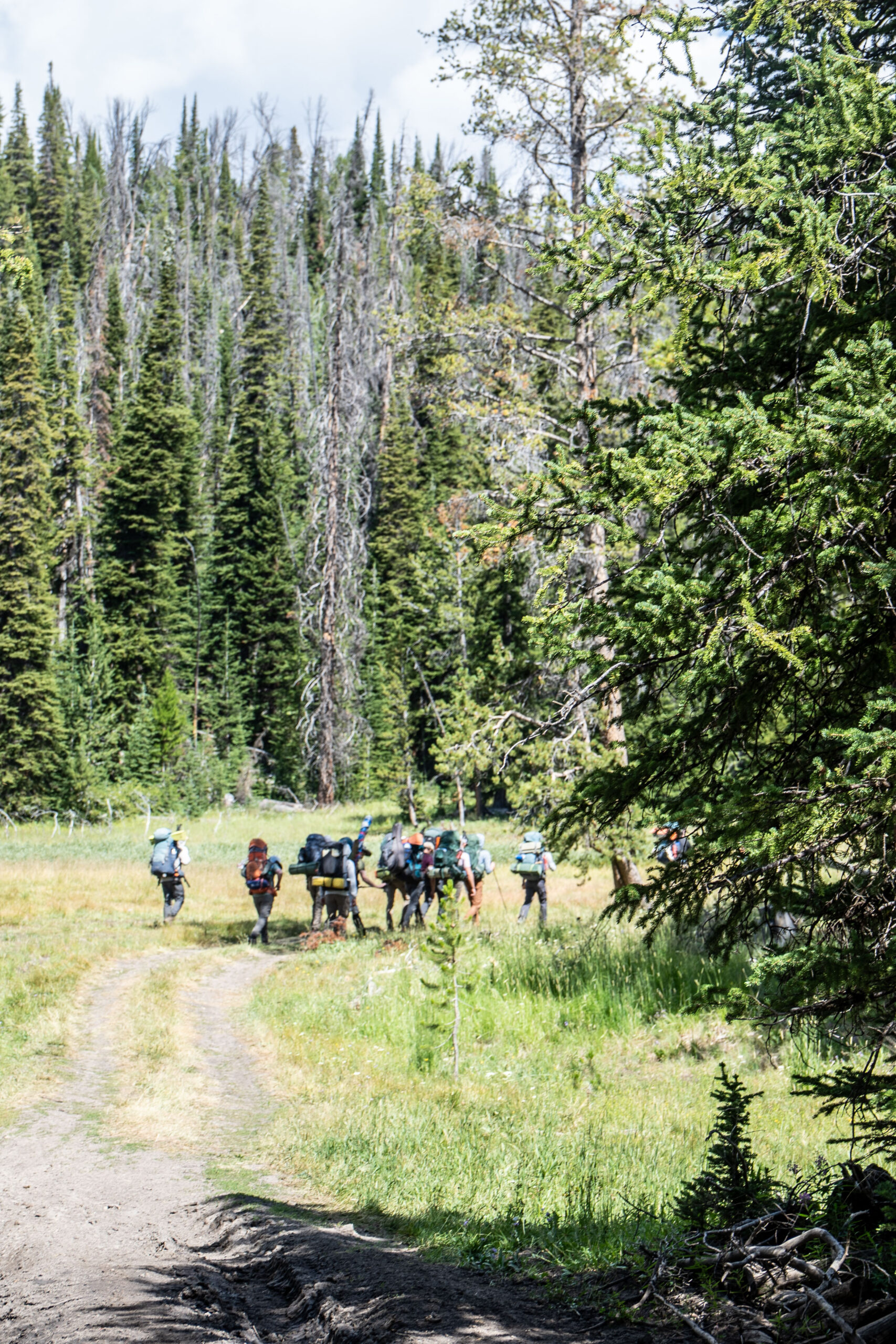
On Sunday, August 2nd, the forty-six members of Wyoming Catholic College’s newest freshman class, the Class of 2029, embarked on what we like to describe as “the best Freshman Orientation in the country:” the legendary 21-Day Expedition.

The first few days of Welcome Week were spent moving into their new residences, familiarizing themselves with the College spaces and the town of Lander, attending orientation and Q&A sessions where students and parents alike had the opportunity to talk at length with the College’s administration and current students. But by Wednesday, attention turned entirely to prepping for the 21-Day: three days of Wilderness First Aid training, food packing, pouring over maps in each WCCL’s “war room,” and spending hours getting to know one another and the Wyoming terrain that will be their home for the next three weeks.

“While on the freshman expedition,” as their preparation materials told them, “you will be living in surroundings that provide encounters with the True, the Good, and the Beautiful in what is considered God’s ‘First Book:’ the natural world. This experience will reinvigorate your imagination, and act as a catalyst in opening your mind and heart to the rest of what the College has to offer.”

In the various orientation talks, where the College laid out some of the many reasons the 21-Day Expedition is such an important part of the WCC experience, these young people were reminded that “members of the group need to cohere as a team, to treat one another with consideration and fairness, to handle one another’s failings equitably, and everything else implied by the social virtue of justice.”

“This last point brings out the special role of the wilderness expedition as opposed to just any outdoor activity. …The need to balance individual and common goods, often masked in large cities, emerges clearly; the value of true leadership and of active following, distorted by petty politics, becomes clear; lastly, the supreme importance of human virtue for the good of society stands forth in stark relief.”

On the big day itself, the freshmen grabbed breakfast outside Holy Rosary Catholic Church after 7am Mass, while their instructors and chaplains gathered for a final review and a quick prayer. Then, after the annual group photo, they were off! They boarded five vans and headed for the Rams Horn Trailhead in the Absorkas and the Big Sandy and Sedgwick Meadows Trailheads in the Winds. The next three weeks will be transformative for them, we know; and we would ask that you please keep them and their adventures in your prayers!

“Overwhelmed with gratitude!”—President Kyle Washut Reflects on Diaconate Ordination

On Thursday, June 12th, President Kyle Washut was ordained to the diaconate by Bishop Artur Bubnevych, Bishop of the Eparchy of the Holy Protection of Mary (Eparchy of Phoenix). Father Deacon Washut, who will continue to serve as President of Wyoming Catholic College, was asked to reflect on the offices and duties of the deacon, and on the particular ways in which it applied to him in the unusual role of college president. Those reflections are below.


Remarks on the Occasion of my Ordination to the Diaconate
St. Stephen’s Byzantine Catholic Cathedral
Phoenix, AZ – June 12, 2025

I am overwhelmed with gratitude! Gratitude to Bishop Artur, to the vocations directors who have guided me over these years, to the chaplains and pastors who have advised me, and to those who join me today in this wonderful celebration.

My remarks on this joyous occasion are arranged according to the three offices that are entrusted to a deacon—preaching, works of charity and service, and liturgy—the three offices that correspond, respectively, to the image on the holy card commemorating my ordination, and to the two Scriptural citations it bears.

The deacon’s first office is the Office of Preaching. In the liturgy, he is entrusted with the proclamation of the Gospel and with preaching its meaning. When St. Francis of Assisi finally agreed to be ordained a deacon, it was so that he could assume this office of preaching the Gospel. I selected the icon of Christ preaching in the temple as a way of emphasizing the ministry of preaching which I have now received. But it is an image that is very meaningful for me personally, as well. Eighteen years ago, as I prepared to enter the Eastern Christian Study Program at the International Theological Institute in Austria, I wrote to the vocation director about my desire for ordination. Since that day, the road has been full of twists and turns and delays—changing bishops, deaths, lost paperwork, and more.

The icon on my card depicts Jesus as a twelve-year-old, sitting in the temple and preaching to the assembled elders and priests. But then, his mother comes and calls Him back to rural Nazareth, and He does not begin His public ministry for eighteen more years. This delay is not one of pointless waiting, however. In fact, He transforms the place to which He retreats. Mary, His mother, herself becomes the throne of wisdom, replacing the throne in the temple. His family is drawn up into the mystery of His redemptive work, and His day-job as a carpenter becomes a conduit of grace for all around Him. In a sense, Christ does not abandon the need for a temple, but refashions the tiny town of Nazareth into a true temple, and from there, He begins His ministry.

That’s very much how I feel. The eighteen-year delay has blessed me with my beloved wife and my six beautiful children. My diaconal ministry will be a fount of grace for them, but more importantly, they—my Nazareth—have become the place of my ministry, and are taken up into it. Also, in the order of Providence, had I been ordained in a more streamlined fashion (as I wished), I would not now be the president of Wyoming Catholic College. This role, too, is taken up into my new ministry. Just as Our Lord’s work as a carpenter was a sign of His redemptive building of the Church, so, too, may my work as president be a conduit for my preaching of the Gospel.

Next, the deacon is entrusted with the call to diakonia, that is, the Office of Service. He is to be an icon of Christ, who came as a servant. And he is to offer the spiritual and corporal works of mercy to meet the needs of the Church. Today, the fifth day of Pentecost, is dedicated to praying for the fifth gift of the Spirit (counsel), the fifth Beatitude (mercy), and the fifth fruit (kindness)—all of which are ordered to the practical, active works of merciful love. Being ordained today, I feel called to the practical works of service, but especially in regard to the spiritual works of mercy.

The spiritual works of mercy are not as tangible as the corporal works: feeding the hungry and clothing the naked are clear, physical manifestations of the healing mercy of Christ. But the Church has always recognized the profound need to offer the spiritual works of mercy, as well—the redemptive works of Christ applied to the spiritual needs of those who might not even know they need that mercy.

As deacon and as college president, I am tasked with the spiritual work of mercy that is Christian education. St. Paul tells us in Philippians that the goal of education is to put on the mind of Christ. This mind, Paul reminds us, is the mind of a servant, for Christ humbled Himself and took the form of a servant. As deacon, ordained to have the mind of Christ the Servant, I consecrate my time at Wyoming Catholic College to that spiritual work, as we help our students to have their minds renewed in our Incarnate Lord.

Lastly, the deacon is called to a particular ministry of prayer at the altar, to the Office of Liturgy. As one of the liturgical instructions puts it, the deacon gathers the prayers of the people within himself, and then raises them up aloud in the Church, serving as the link between the priestly offering and the people’s petitions. As a servant of Christ, I am called to be a steward of the Sacramental Mysteries—not by being the one who consecrates or absolves, but as the one who gathers the prayers of those in my community to apply the sacramental grace to those needs.

In praying aloud the prayers; in whispering the intentions of the living and the dead as I incense the the altar or lift the consecrated gifts as an offering to the Father; in beseeching the Holy Spirit to descend upon us and our needs, I will be serving as one called and consecrated to pray for the people entrusted to me. This means that I am especially consecrated to pray for the community of Wyoming Catholic College: our students, our faculty, staff, board, benefactors and friends. I am eager to exercise this ministry of prayer, and I ask that you pray for me today, that I may worthily fulfill this awesome ministry.

Wyoming Catholic College’s Class of 2025 Told “The World Needs You!”

Video of this year’s festivities can be found HERE or at the bottom of this news story.

On Monday, May 19th, Wyoming Catholic College held its 15th Commencement Exercises in recognition of the fifty young men and women of the Class of 2025, the largest graduating class in the College’s history. Held in the Lander Community and Convention Center before an audience of well over 600, the ceremony was the perfect conclusion to their four-year adventure, filled with gratitude for their time in Lander, and looking forward to the adventure that lies ahead.

This year’s Senior Address was delivered by Kolya Sidloski, of Saskatoon, Canada, began his remarks to his classmates by acknowledging the great opportunity they had  all been given: “I dare not even try to say what a gift it has been for me to share—to really share!—these past four years with you.” Sidloski told his fellow graduates that “if these past four years have done anything for us at all, one must hope that they have done this: that they have drawn us from the isolation and narcissism of our self-interest to the beginning of the bond of perfection which constitutes us as beings in communion, learning what it means to really share life. Classmates and friends,” he exhorted them, “don’t stop sharing life!  This is our task: to carry on that movement into a richer sharing through the gift of our very selves. We are the secret radicals, as John Senior says, who subvert the secular order not by terrorism, but by sacrifice.”

Sidloski’s remarks were followed by a rousing address from this year’s Commencement Speaker, Chris Stefanick.  An internationally acclaimed Catholic author, speaker, and evangelist, Stefanick reminded the fifty young men and women of the Class of 2025 of the great blessings they’d received through their education, and offered his advice and encouragement in confronting the challenges that lay ahead. “What these students just went through is what Jesus called all of us to when He started His ministry,” he said. “Metanoia. Change your mind. Change your thinking. Change how you see and approach absolutely everything. That’s what these students just did and that is amazing and that is beautiful. The bad news is you’re about to re-enter a world that doesn’t just disagree with you about certain things, but that sees life in an entirely different way.”

“[There are] things that you’ve done naturally here that will very soon become a fight,” he told them. “Hold these things in your life so that you can live with the joy of St. Paul in prison and be the light that this world desperately needs. This is a battle you can’t afford to lose.” He closed his exhortation with some final words of encouragement: “The city walls have fallen and the world needs you. And the Church needs what you have. …The joy of the Lord must be your strength!”

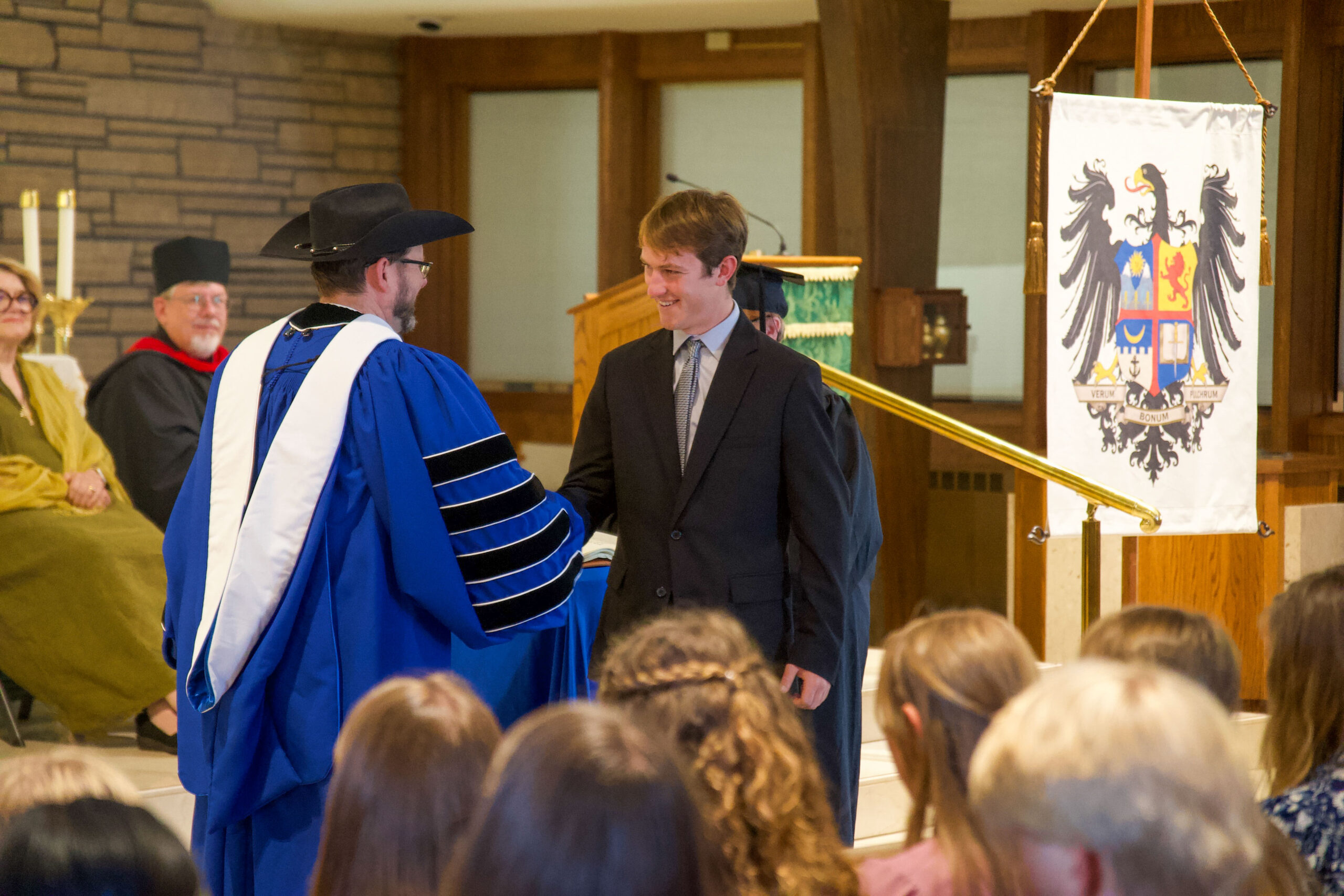
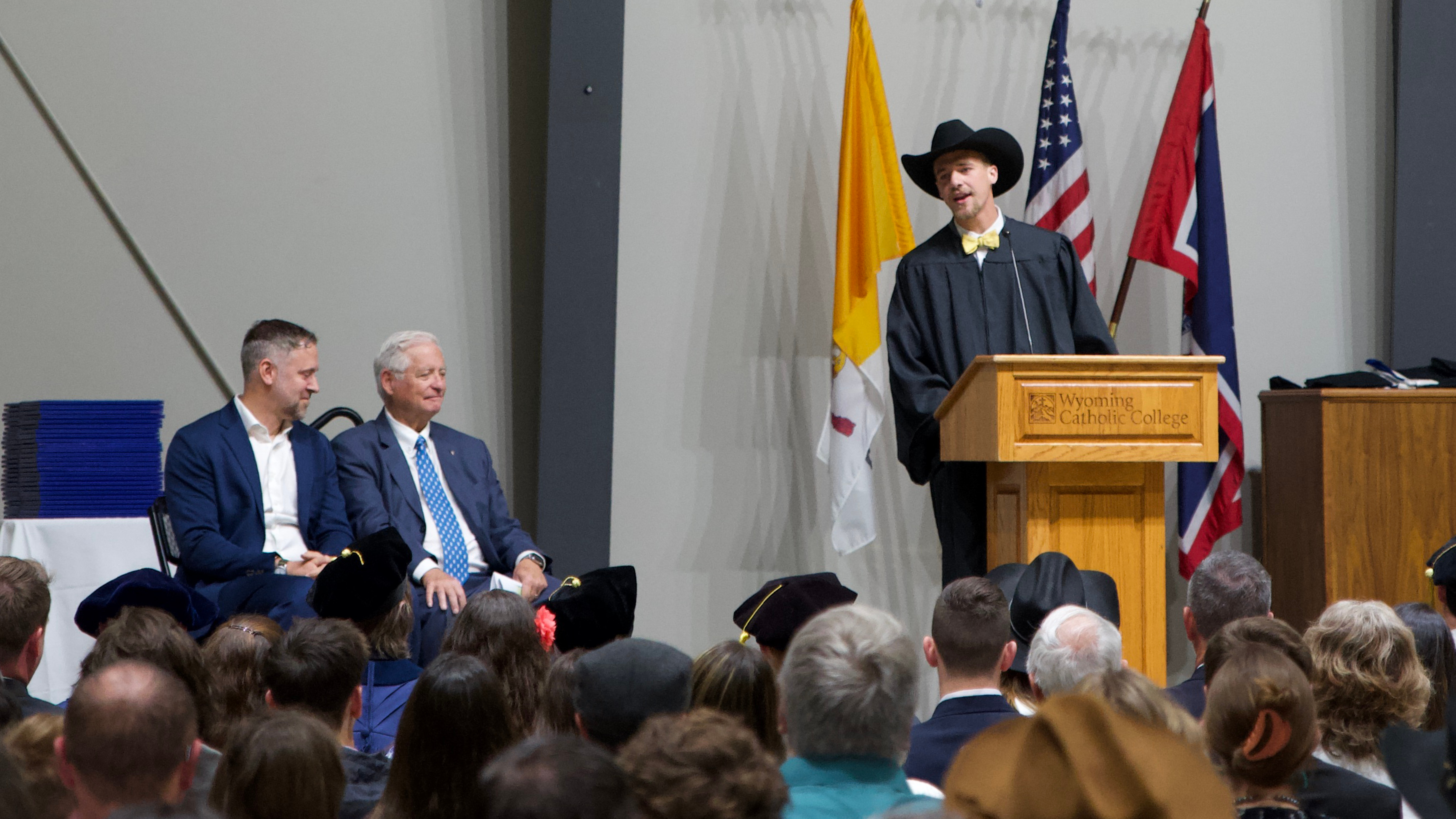
After the speeches, the ceremony continued with the conferral of the degrees. Students crossed the stage as their name was announced, shook President Washut’s hand, and received their diploma, encased in a blue cover bearing the College’s crest. Then, after the graduates were presented to uproarious applause, the festivities concluded with the singing of the College Alma Mater before the newly-minted graduates processed out, each wearing the distinctive black Stetson cowboy hat and hatpin they had received earlier that weekend.

The Class of 2025:
Maria Teresa Benedicta Amorose (Mesa, AZ)
Clara Rose Anderson (Moline, KS)
Clare Marie Bagdazian (Santa Paula, CA)
Jacob Andrew Baska (Mesa, AZ)
Elizabeth Muriel Beardslee (Peru, NE)

Ethan Fletcher Boord (Olive Branch, MS)
Veronica Clare Britt (Carrollton, TX)
Dominic Joseph Brown (Milan, MI)
Maria Concetta Camardo (Harvard, MA)
Marie Helen Louise Carstens (Soldiers Grove, WI)

Sean Alexander Cartier (Denver, CO)
Luca Joseph Castronova (Bloomington, IN)
Luke Michael Christopherson (Charlotte, NC)
Anne Catherine Cocker (Rancho Cordova, CA)
Edward Joseph Collins (Santa Paula, CA)

Joseph Donald Collins (Ojai, CA)
Ryan Wesley Craver (Pfafftown, NC)
Hope Victoria Francine Crawford-Guarnera (Colorado Springs, CO)
Joseph Peter D’Antonio (Fredericksburg, VA)
Jerome Emmanuel Daly (Vashon, WA)

Anna Lynn Daskiewicz (Omaha, NE)
Mary Alice DeSilva (Cranston, RI)
Elizabeth Blair Eckel (Alexandria, VA)
Grace Rebekah Hamilton (Granite Canon, WY)
Benjamin Alexander Haywood (Indianapolis, IN)

Hayley Marie Heidt (Cumming, GA)
Ellen Marie Hesselbrock (Louisville, KY)
Jacob Pierre Landry (Westminster, MD)
Lathan Alexander Layfield (New Braunfels, TX)
Elijah Michael Lee (Independence, MO)

Aidan Xavier Luzarraga (Ave Maria, FL)
Frank Magongwa (Lilongwe, Malawi)
Maria Francesca Mortensen (Lander, WY)
Nyra Juliana Ortiz (Penfield NY)
Cecilia Anne Pautler (Birmingham, AL)

Hayden Daniel Raines (Campobello, SC)
Clara Rose Ramsay (Austin, TX)
John William Renouard (Butte, MT)
August John Seeber (Virginia, MN)
Benjamin Francis Seeley (Sykesville, MD)

Grace Emma Sherman (Salt Lake City, UT)
Kolya Alexander Sidloski (Saskatoon, SK, Canada)
Catherine Jacinta Stancliffe (Kansas City, MO)
Anna Maria Joan Tabeling (Superior Township, MI)
Grace Anne Athanasius Tabeling (Superior Township, MI)

Abraham Francis Tardiff (Coventry, RI)
Brigid Katherine Van Hecke (Hartland, WI)
Matthew Isaiah Vidimos (Bedford, TX)
Everest James Wagner (Indianapolis, IN)
Bren Erin Walsh (Noblesville, IN)

“Habemus papam:” WCC Community Celebrates Election of Leo XIV

“White smoke! There’s white smoke!”

For the world’s 1.4 billion Catholics, the period of sede vacante, the interregnum that takes place between the passing of one pope and the election of the next, is always a strange one. Here at Wyoming Catholic College, the daily prayers being offered for the repose of the soul of Pope Francis and for the for the guidance and inspiration of the Church and her cardinals as the conclave began kept the fact that we were without a pope at the forefront of everyone’s minds. So it will come as no surprise that the appearance of white smoke above St. Peter’s on Thursday brought a rush of excitement to the offices, hallways, and classrooms of the College.

Thanks to Wyoming Catholic’s unusual tech policy, it took a while for the news to filter out into the community. But as word spread across campus, students and staff streamed into offices throughout the Baldwin Building, clustering around desks and computer monitors to watch the Vatican live-stream with baited breath. The absence of cell phones meant that the hour between the signaling smoke and the eventual unveiling of the new pope became a true community event. Everywhere, rooms were filled with eager chatter and nervous laughter, all eyes on the red curtains on the loggia balcony atop St. Peter’s Basilica. Elsewhere in town, faculty members gathered with their families, watching the silent, still curtains for signs of the new Pope.

When Leo XIV finally emerged to the roar of the crowd in St. Peter’s Square, he was greeted with shouts of excitement and prayers of gratitude back in Lander, as well. The Church had a leader—a father!—once again. Later, the College’s Roman  Rite chaplain, Father Godfrey Okwunka, announced that Friday’s midday Mass would be celebrated in thanksgiving for the election of the new pope.  “Habemus papam!”

“We rejoice with all the world’s Catholics at the election of Pope Leo XIV,” said President Kyle Washut. “And we ask God to grant him good health, fortitude, and sanctity as he shoulders the immense responsibility of protecting the deposit of the Faith and preserving the unity of the Church.”

“We are further excited, as fellow citizens of Pope Leo XIV, continued Washut, “to welcome the first North American pope.” In the days leading up to the conclave, many spoke of then-Cardinal Prevost as a man particularly well-suited to carry on the work of Pope Francis. In recent weeks, I have myself spoken about Pope Francis’s educational legacy, which I see as crucially important to our time: his development of the Church’s social doctrine through his critique of the technocratic paradigm; his embrace of a new, holistic educational model, focused on access for all; and his attempts to integrate the faith with the various disciplines of human knowledge (especially literature), immersing students in the goodness of nature and asking them to abstain from the ubiquitous screens that surround them. I see this as a vital part of Francis’s legacy, and I pray that Leo XIV will continue and further that emphasis.”

“Habemus papam!”

In Wake Of Pope’s Passing, Wyoming Catholic College Joins Universal Church In Prayer

The Wyoming Catholic College community was saddened to learn of the passing of Pope Francis early this Easter Monday, April 21st. “The pope is much more than just the Church’s chief administrator and political leader,” said President Kyle Washut. “He is our spiritual father and successor to St. Peter. It is he who has been charged to preside over the Church in charity and preserve its unity. The death of a pope is felt particularly keenly by Catholics everywhere, and we will pray in a special way for the repose of his soul and for the comfort of all in the Church.”

“Easter is a time of particular grace, of mercy, and of hope,” Washut continued “and our prayers for the repose of Francis’ soul will be especially joined to our Easter liturgies in the coming days. Bishop Steven Biegler, head of the Diocese of Cheyenne, has encouraged us all to pray for the repose of Pope Francis, especially noting the following prayer as appropriate: ‘Eternal rest grant unto him, O Lord, and let perpetual light shine upon him. May his soul and the souls of all the faithful departed, through the mercy of God, rest in peace.’ Since the recitation of the Chaplet during the Easter Octave is especially concerned with praying for the salvation of souls, I have asked the entire College community to add the ‘Eternal Rest’ prayer to our Divine Mercy Chaplet, prayed at 3:30pm each day of the week. We will include this prayer for the repose of the Holy Father’s soul in our prayers until nine days after his funeral, as is customary.”

President Washut also noted the reflections of Bishop James Conley, long-time friend of the College and a member of its Board of Directors: “As we mourn his passing in this Jubilee Year declared by Pope Francis with the theme ‘Pilgrims of Hope,’ let us trust in the hope we have as Christians in the Resurrection. Pope Francis went to his eternal reward during this Easter Octave in which we celebrate the hope of eternal life won through the paschal mystery, the passion, death and resurrection of Jesus Christ. Let us remember the lessons Pope Francis taught us as we strive to bring the love of Jesus Christ and our Catholic Church to the world, starting with those in our own neighborhood.”

“The time of papal interregnum, of ‘sede vacante,’ is always such a disorienting one,” said President Washut, “and for many of our students, it will be the first time they experience it as Catholic adults. In today’s Divine Liturgy, celebrated by our Byzantine chaplain, we heard a reading from the Acts of the Apostles in which the Apostles are guided by the Holy Spirit in electing Matthias to join their number. I was reminded that it is a special mark of the Paschal Church for the Holy Spirit to raise up wise and noble shepherds for the faithful. In this confidence, we will be praying for the guidance and inspiration of the Church and her cardinals as they enter into the conclave in the coming weeks.”

Eternal rest grant unto him, O Lord, and let perpetual light shine upon him. May his soul and the souls of all the faithful departed, through the mercy of God, rest in peace.

For a reflection from President Washut on the impact Pope Francis had on the world of higher education in particular, VISIT HERE.

“She’s here!”—Much-Anticipated Icon of Our Lady, Seat of Wisdom, a Gift from the Class of 2023, Has Arrived

When the Class of 2023 departed from Lander after their four years at Wyoming Catholic College, they left behind countless memories for the community to remember them by. But they also left behind the promise of a more concrete keepsake for their class gift: an icon of Our Lady, Seat of Wisdom, commissioned from British iconographer Martin Earle, a Catholic artist specializing in works for churches and the liturgy.

At the end of February, the icon made its much-anticipated arrival in town. President Kyle Washut and several representatives from the Class of 2023 helped unbox the carefully-packed image, before a number of students, faculty, and staff who had gathered in the upstairs of the Baldwin Building for the occasion. President Washut explained the image’s symbolism to the assembled crowd, noting that Earle had incorporated some distinctively Wyoming imagery into the painting, such as the Indian Paintbrush flowers at Our Lady’s feet and several local mountain silhouettes in the background. (Also worthy of particular mention, the incredible, hand-carved frame upon which the icon is written.)

“We’re very grateful to the Class of 2023 for this gift,” said President Washut. “There are surprisingly few sacred images of Our Lady under her title, Seat of Wisdom. Now that we have our own, our daily devotions and regular celebrations will be greatly enriched by this icon’s presence.”

This past Sunday was the first Sunday of Lent, known in the Byzantine tradition as the Sunday of Orthodoxy. As the juniors just studied in their theology class, it is a feast that commemorates the restoration of icons to public worship (after the iconoclast persecutions), recognizing in the icon the embodiment of the Church’s orthodoxy, its right teaching, and its call to worship. It was an especially fitting day to hold the formal blessing of the College’s patronal icon, overseen by our Byzantine chaplain, Father David Anderson.
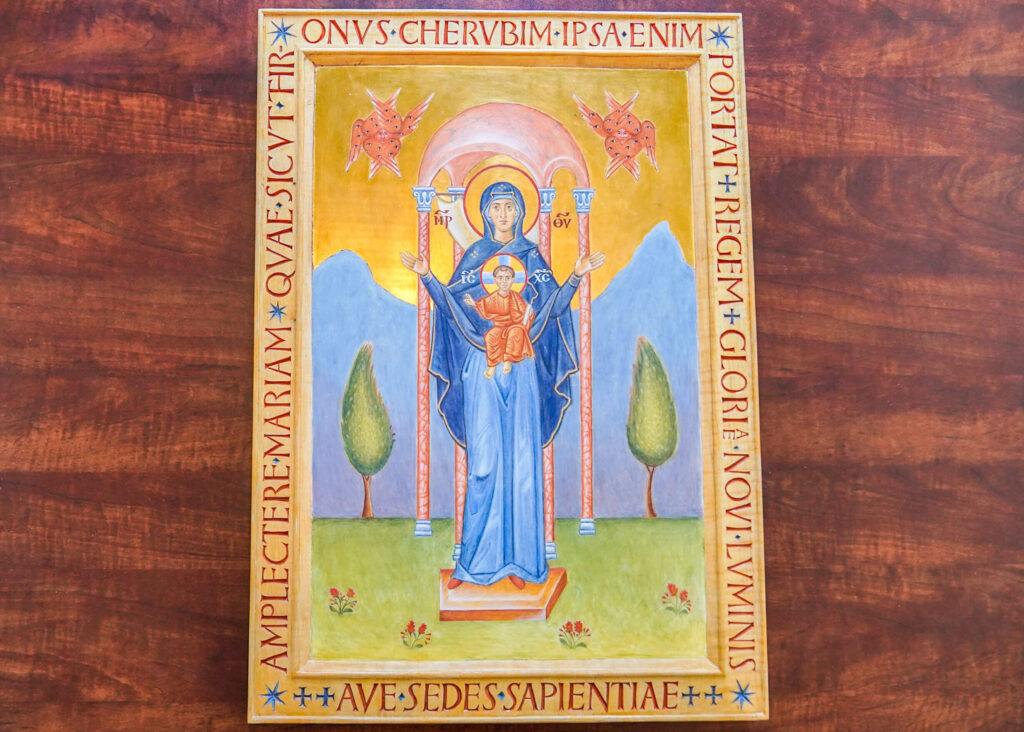
“In Junior Theology class,” President Washut reflected, “I was just discussing with my students the salvific importance of icons in the theology of the Greek Fathers. For them, the icon is a sign of the radiating effects of the Incarnation continuing to effect the material world we live in here and now. By placing Our Lady, Seat of Wisdom, in the context of the Wyoming wilderness, the icon is a visible expression of our motto: ‘Wisdom in God’s Country.’ It is a sign of our work at the College: gathering in the wilderness, apprenticing ourselves spiritually and studiously to Wisdom Incarnate, so that we, like Mary, can carry that wisdom to those we meet.”

In 2005, Bishop David Ricken consecrated the not-yet-realized Wyoming Catholic College to Our Lady Seat of Wisdom, a title associated with the Feast of the Presentation (February 2nd). Since 2007, the College has observed her feast on the first available day after February 2nd. This year, that celebration included Father David Anderson leading the annual singing of the Akathist to Our Lady Seat of Wisdom, followed by a banquet in her honor at the Lander Community Center. The next morning, Tuesday, the All-College Mass at Holy Rosary was celebrated in her honor, and the rest of the week was taken up with Senior Orations, all under her gentle patronage.

Our Lady, Seat of Wisdom, Pray for us!

Real Life Catholic’s Chris Stefanick Announced as Wyoming Catholic’s 2025 Commencement Speaker

Chris Stefanick, an internationally acclaimed author, speaker, and television host, will deliver the Commencement Address at this year’s Commencement Ceremony, which will be held on Monday, May 19th.

“Chris has been a clear and compelling voice on behalf of Catholic evangelization for many years,” said President Kyle Washut, “and we are pleased to welcome him to Lander this spring. I am grateful that he has agreed to join us for our Commencement festivities, and I look forward to the wisdom and advice he will offer to our graduates as they complete their time with us here at Wyoming Catholic College. The ability to discern, to speak the truth, and to evangelize on behalf of their faith will be a vital part of their lives after graduation. And who is better suited to send them on their way than Chris?”

A resident of Denver, Colorado, Stefanick has devoted his life to sharing the love of Jesus and helping others do the same. His live seminars, TV, radio, and video ministry have reached millions, he has authored a confirmation prep program that’s been used by over a million people, and he has recently released a bestseller, Living Joy: 9 Rules to Help You Rediscover and Live Joy Every Day.

A graduate of the Franciscan University of Steubenville, Chris began his career as a highly-regarded youth and young adult minister working at the parish level before assuming larger responsibilities at the diocesan level. He has provided outstanding counsel for many years to various bishops throughout the country, and to several committees of the United States Conference of Catholic Bishops. He is a recipient of the Papal Benemerenti Medal, which is given for achievement in ministry, and is also the founder and president of Real Life Catholic, a non-profit organization that makes his initiatives for renewal a reality. Above all, he is proud to be husband to Natalie and father to their six children, and a grandfather of four.

For more details or to RSVP, please visit www.wyomingcatholic.edu/graduation.

A Conversation with WCC’s Newest Professor: Father Robert Nicoletti

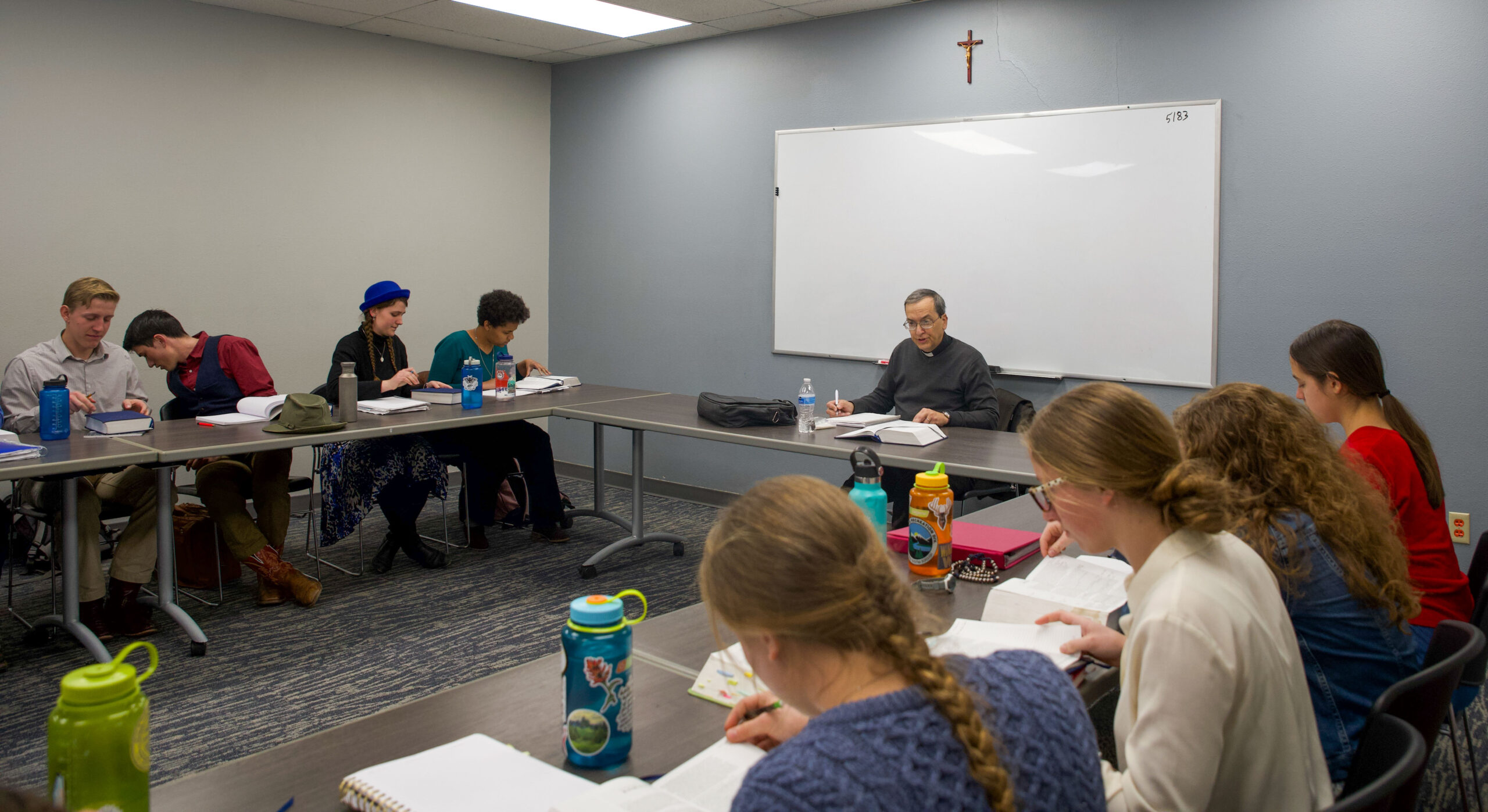
In the spring of 2025, the Wyoming Catholic College community welcomed a new visiting professor to Lander: Father Robert Nicoletti, MJ.

Father was born in Brooklyn, raised in Arizona, and was ordained to the priesthood in 1992. His vocation has given him the chance to live and work in Ukraine, Czech Republic, Italy, Spain, Puerto Rico, and the USA. Studies at St. John’s College in Santa Fe, Arizona State University, and The Angelicum culminated in the defense of his doctoral thesis in philosophy in June of 2024.

Julian Kwasniewski, the College’s Marketing and Communications Coordinator, recently had the chance to sit down with Father to discuss his background, his path to Wyoming Catholic College, and what excites him most about this next chapter in his adventure.


Wyoming Catholic College: Tell us a little about your background. Where did you grow up?
Father Robert Nicoletti: Life started for me in 1962, in Brooklyn, NY. But by 1972, I was living in Phoenix, AZ, where I stayed while my academic adventures took me through St. John’s College in Santa Fe and Arizona State University. In 1983, I joined Miles Jesu. I professed vows in Avila in 1988, and was ordained a priest in Rome in 1992.

WCC: What is distinctive about your order, Miles Jesu?
Father Nicoletti: It is an “Ecclesial Family of Consecrated Life” with the full name of Sons and Daughters of the Immaculate Heart of Our Lady of the Epiphany. Within the community, we have consecrated lay men and Priests, and other communities of consecrated lay women–with perpetual vows. Outside the community, we have associates, called Vinculum, who may be married or single.

WCC: What led to your doctoral studies in Rome, and what was the topic of the doctorate that you completed during your time there?
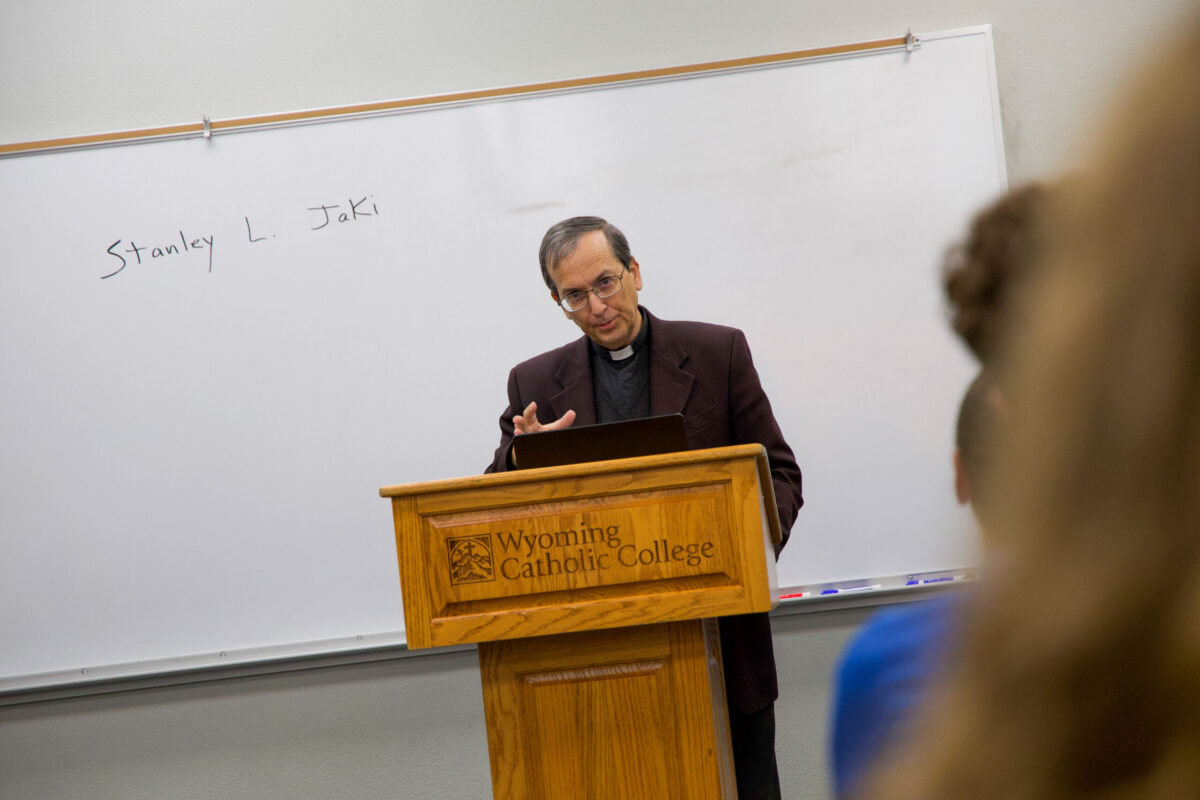
Father Nicoletti: Miles Jesu does most of its philosophical and theological studies in Roman Pontifical universities. After working in Ukraine for 16 years, I discerned that teaching philosophy was part of my calling, so I returned to The Angelicum to complete a doctorate with the title, “Thomistic Order in Stanley Jaki, Philosopher.”

WCC: How did you come to be ministering in Ukraine?
Father Nicoletti: At the time of the fall of the Iron Curtain, Miles Jesu saw that Communism would leave a vacuum which could be filled with either God or money. I was sent to Ukraine in 1995 to help convince the youth there that God was the better choice.

From 1995-2011, I joined consecrated lay men and women of Miles Jesu to serve in two orphanages, a soup kitchen, and a youth center for retreats and confessions as well as catholic formation of youth and professionals. Although there still were many toxic hold-overs from the anti-God system, I enjoyed meeting heroic priests and laymen, and seeing the Greek-Catholic Ukrainian Church come up from under-ground.

They need our prayers.


WCC:
What brought you to Wyoming Catholic?
Father Nicoletti: A Wyoming Catholic College student informed my community in Phoenix about the program and the ambience here. The Catholic environment to study the Great Books is what drew me.

WCC: You come to Wyoming Catholic College as a visiting professor. What excites you most about our unique curriculum, and what is your favorite topic to study or teach?
Father Nicoletti: Liberal Arts, while preparing a person for any profession, also enables us to drink from Sacred Tradition our whole life, and enrich others with it. I myself am always eager to study Thomism, metaphysics, cosmology, and the like. And teaching it is even better!

WCC: As a priest who has celebrated multiple liturgical rites, why do you think it valuable for Roman and Byzantine Catholics to participate in each other’s liturgical traditions?
Father Nicoletti: The diverse cultures which gave birth to our Catholic rites promote the same Faith but with different emphases in theology, devotion, and liturgy. Why not enjoy the Mysteries from diverse and complementary perspectives?

WCC: What is one thing you look forward to doing during your time in Wyoming?
Father Nicoletti: I look forward to learning how residents think. Over 40 years of consecrated life, the Lord has often shown me how each locale has its culture to learn from. Curiosity aside, this experience helps me to serve them.

It’s Orations Week 2025!

A few weeks into the Spring Semester each year, the Wyoming Catholic Community gathers for Senior Orations Week.

During the week, regular classes are suspended as the seniors present their orations to faculty, fellow students, board members, and guests of the College. The classrooms are often packed to overflowing for these presentations, which are frequently delivered entirely from memory (though a few notes are permitted). Afterwards, the seniors field questions on the topic for another half hour (or so).

The oration itself is based upon the senior thesis, which each senior completed at the close of the Fall semester. The oration is not a mere exposition of the thesis, but draws upon the work done during the thesis-writing process. This year’s list includes topics as wide-ranging as “Spies Can Lie: Reconciling Scholastic Thought with Political Reality” or “By Their Fruits You Shall Know Them: How External Forms of Decorum Can Lead to Moderation and Virtue in the Soul;” “The Crisis of Postmodernity: A Rejection of the Transcendentals and of True Rhetoric” or “Quit Harvard, Go Sailing: Custom as the Gateway to Compassion in Dana’s Two Years Before the Mast;” “I Have Called You Friends: The Necessity of Vulnerability and Honesty in Prayer,” “Is Transgenderism the Perfection of Man? An Exploration into the Philosophy Behind Transgender Ideology,” and “From Selfies to Stewardship: Aldo Leopold, Farmers, and the Future of our National Parks.”

Each presentation will be live-streamed, and a schedule with links is posted HERE. The booklet, painstakingly assembled each year by Dr. Michael Bolin, is available HERE. And the YouTube Live playlist for the entire week can be found HERE.