
An Outreach of Wyoming Catholic College
An Outreach of Wyoming Catholic College
At Wyoming Catholic College, every student participates in a robust outdoor program, a vital pillar that helps form bold and resilient leaders who take what they learn in the classroom and live it in the backcountry.
Our students love the tattered books that inhabit their shelves because they know how the tattering occurred…those books were their constant companions for months at a time, and the wisdom and stories they contain have invaded every corner of their imagination. They court books like a lover courts his mistress, falling in love with them even to the point of allowing them to govern their thoughts and actions.
But there is something more primary than a book that also needs to invade their imaginations. The Wilderness, or “God’s First Book,” is the first subject of our students’ study; they immerse themselves in it and learn its lessons both through hard knocks and through silent contemplation of its beauty. The Wilderness is both unforgiving and untamed, which forms prudence and courage, and it is the vessel that contains, undiluted, God’s created beauty. It is, therefore, the perfect first teacher for those who seek virtue, wisdom, and God.
Beginning with a three-week freshman backpacking trip before classes begin, every student spends at least ten weeks in the wilderness and all students take an academic course in horsemanship. This unique combination of outdoor education has five key goals.
Throughout the Bible, God uses the solitude, silence, beauty, and challenges of the wilderness to bring about spiritual transformation. Psalm 19 (quoted above) celebrates the way God reveals Himself: first in creation (verses 1-6) and second in the Holy Scriptures (verses 7-14).
WCC students study and encounter God in both creation and Scripture, cultivating a deep sense of wonder. They experience what Pope St. John Paul II described in his general audience of January 26, 2000, “Nature therefore becomes a Gospel that speaks to us of God: ‘For from the greatness and beauty of created things comes a corresponding perception of their Creator’” [Wisdom 13:5].
Whenever students venture into the wilderness, the conditions require that they live outside of comfort zones. There’s no place to hide and few diversions. Students come face-to-face with reality in ways that some have never experienced.
The wilderness forces them to acquire new skills, overcome trials and challenges, exercise self-discipline, and conquer their weaknesses and fears. Each of these demands contributes to greater dependence on God, interdependence with others, and strengthening of the classical and theological virtues.
WCC students learn leadership by leading. While books about leadership are useful, there is nothing like the experience of receiving a map and a compass while being told, “Here’s tonight’s camp site. Get us there. We’re following you.”
In the wilderness, they learn not just leadership techniques, but right attitudes and behaviors with an emphasis on integrity and communication skills. Instructors help students identify their gifts, talents, strengths, and weaknesses as they guide them toward greater confidence and competence as leaders.
“First of all,” wrote St. Thomas Aquinas in De Regno, “among all worldly things there is nothing which seems worthy to be preferred to friendship.”
Beginning with the intense community they develop in the wilderness, WCC students learn to minister to one another, receive from one another, encourage one another, pray with and for one another, and hold one other accountable. And those friendships, forged in the outdoors and carried onto campus and beyond, in part explain the strong and enduring sense of community that marks our college, our students, and our alumni.
Students grow in confidence, virtue, and ability by mastering technical skills and techniques for living in the wilderness. These include backpacking, climbing, mountaineering, food preparation, map and compass skills, route finding, campsite selection, Leave No Trace principles, leadership, “followership,” and the stewardship of creation. The practical learning students do in the wilderness translates directly to greater learning skills in the classroom and beyond.
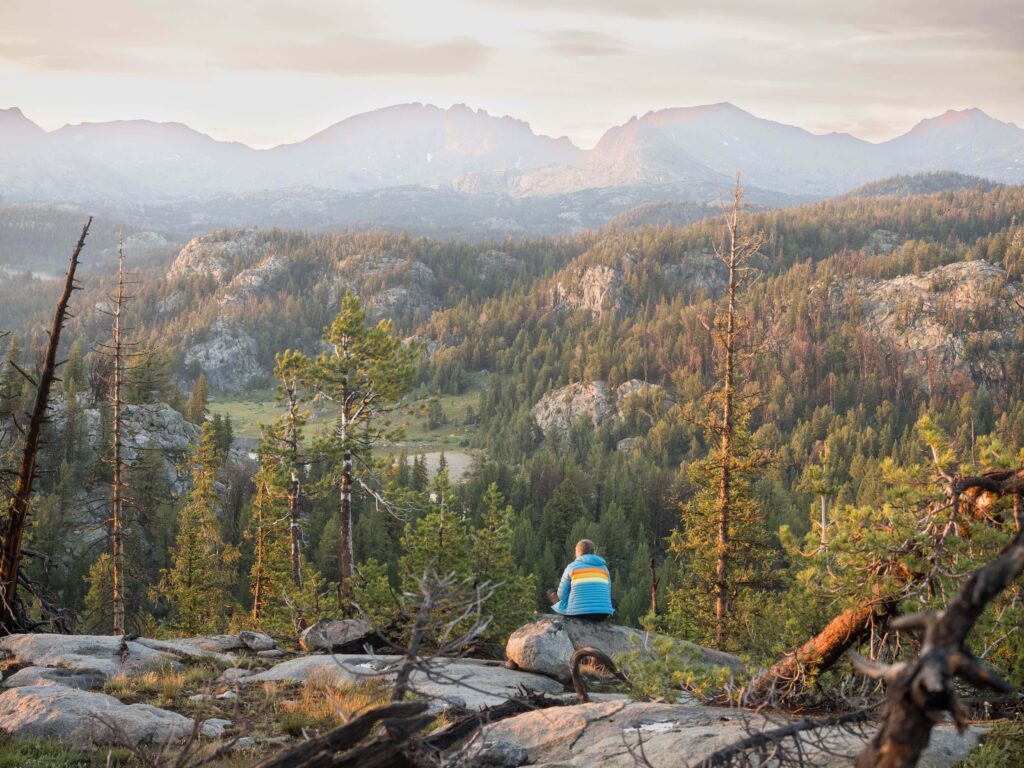
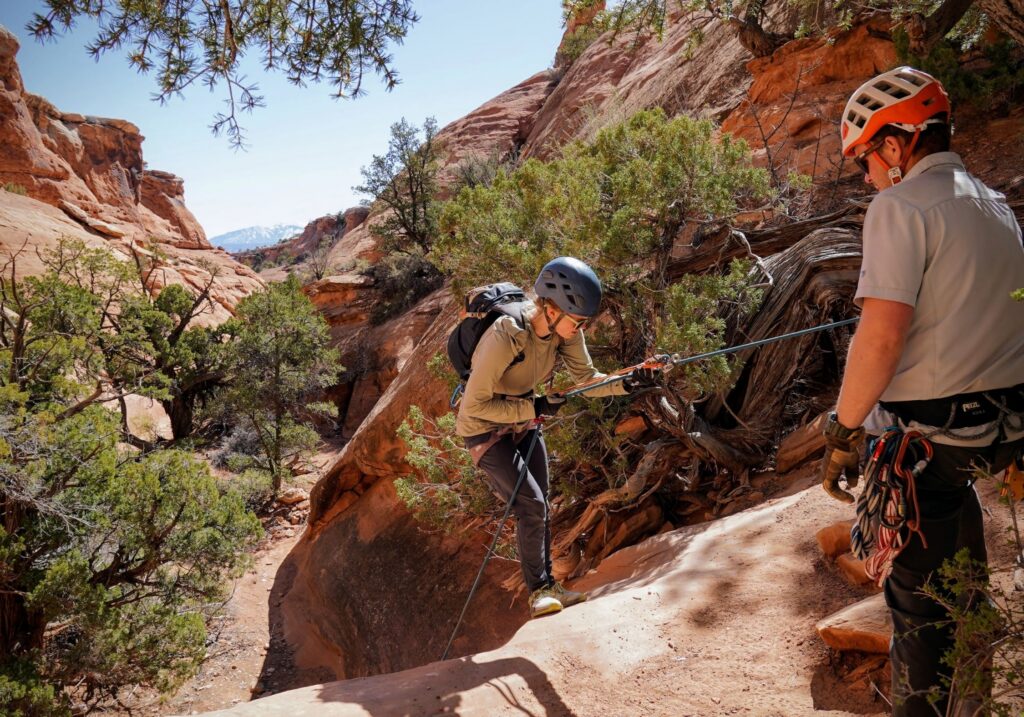
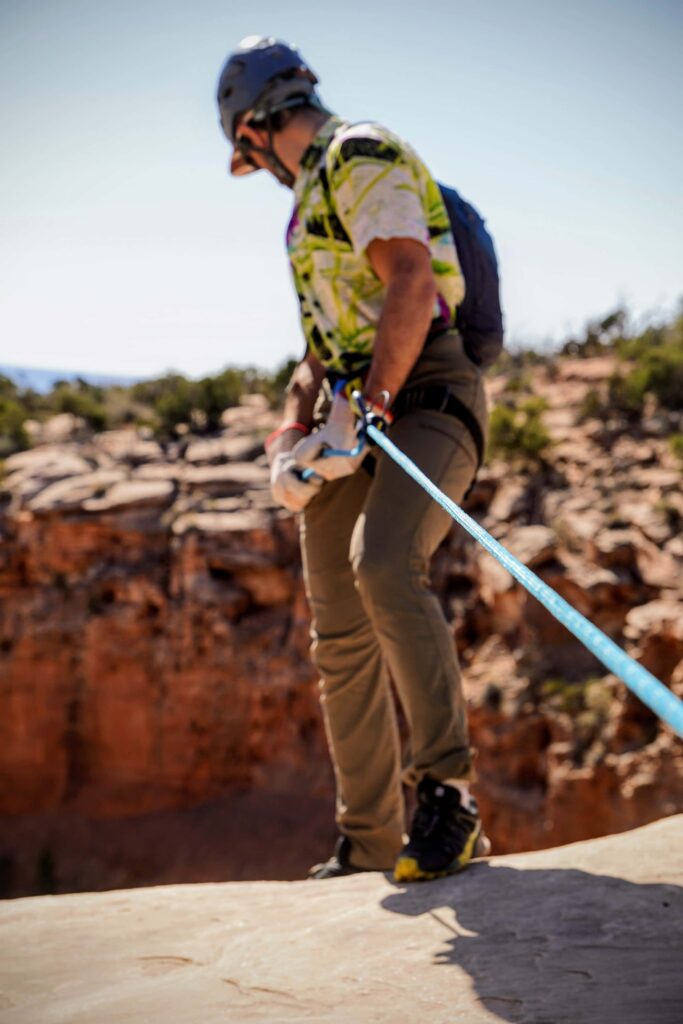
Every student at Wyoming Catholic College must undertake a variety of activities aimed at growth in leadership and virtue. Particular students, however, sometimes wish to go further within the Outdoor Leadership Program, and these students take up the challenge of becoming Outdoor Leaders.
An Outdoor Leader is an individual who understands the importance of active followership but wishes to push themselves farther. They have chosen to devote their time and energy to mastering the skills necessary for guiding their fellow students in the backcountry. Such leaders will have the opportunity to specialize in a number of fields: climbing, caving, skiing, etc.
The WFR course is an intensive, 10-day medical training course in Wilderness First Aid and CPR. Ideally, students will take this course in August (before their Sophomore year). WFRs are responsible for the medical needs of students on each trip, including serving as Lead WFR on week-long trips. WFRs are required to attend monthly medical scenarios in order to maintain their skills. The WFR certification is valid for three years.
These students have already taken their WFR (or will be taking their WFR in August before their sophomore year). Students can begin this process as early as the second semester of their freshman year, and receive an outdoor leader manual, which contains the necessary information for taking a weeklong leader course. Students will master 15 skills, including map and compass skills, bear safety, emergency protocols, and more, and will demonstrate command of a certain skill by taking either a written or a practical test. After mastering these skills, the student must go on a week-long leadership training course (held every May and August). Upon successful completion of a leadership course, they will be permitted to co-lead week-long trips with a more experienced leader, and can eventually develop the capacity to be head lead for one of those trips.
Students who wish to continue their outdoor leadership training (with an eye towards pursuing outdoor education after their undergraduate degree) may become Freshmen Expedition Co-Instructors, which will make them eligible to lead the Freshman 21-Day Expedition. Ideally, students become Co-Instructors the summer after their junior year. Interested students must apply for the position and complete an interview. The students who are hired will be required to take a two-week instructor course, which will involve intense mountaineering and backpacking.
This position is only available to students who have already co-led the Freshman Expedition.
