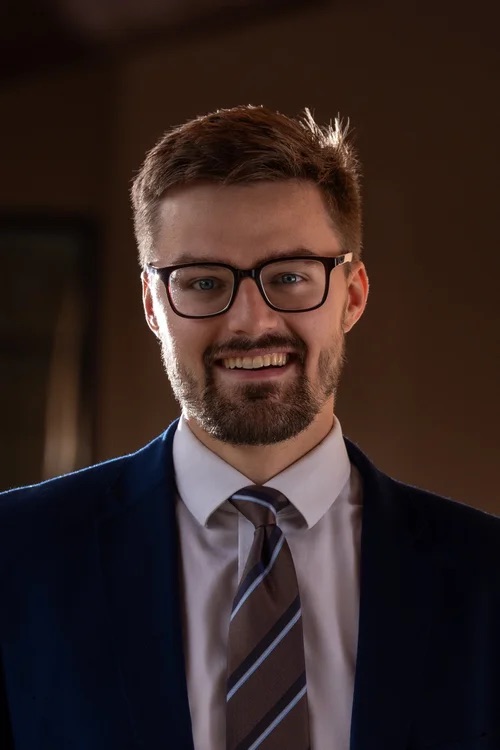
Joseph Maxwell

My formation at Wyoming Catholic College allowed me to be a versatile teacher. My intimate knowledge of the Socratic seminar method and familiarity with multiple disciplines was invaluable. And my leadership training from the College’s Outdoor Leadership Program strengthened my ability to build effective teams and to accomplish the many administrative tasks that go along with running a high school.

My interest in Wyoming Catholic stemmed from my experience of visiting the campus. I was stuck by how alive everyone was. There was space, simultaneously, for both rigorous study and spontaneous adventure. The two seemed to flow together without damaging the experience of either one. Students could devote themselves entirely to their studies while, paradoxically, finding time to rock climb at dawn. I loved that we didn’t have to choose between living an intellectual life and living an adventurous life. We traversed rivers, climbed mountains, and slept in remote canyons all the while discussing literature, reciting poetry, and singing hymns in polyphony.

There was room for everything that mattered, and nothing else.

The smallness, remoteness, and ‘weirdness’ of the College was exactly the cure I needed to break out of the autopilot that ‘normal’ life puts you into. Yes, Wyoming Catholic is small, but it can therefore give you a formation that is personal. It’s remote, but Christ prayed in the desert. It’s weird, but only because it’s different from the culture of mere subsistence. Wyoming Catholic College’s value isn’t diminished by being these things; it is valuable because of these things. I would not be where I am today without this education.

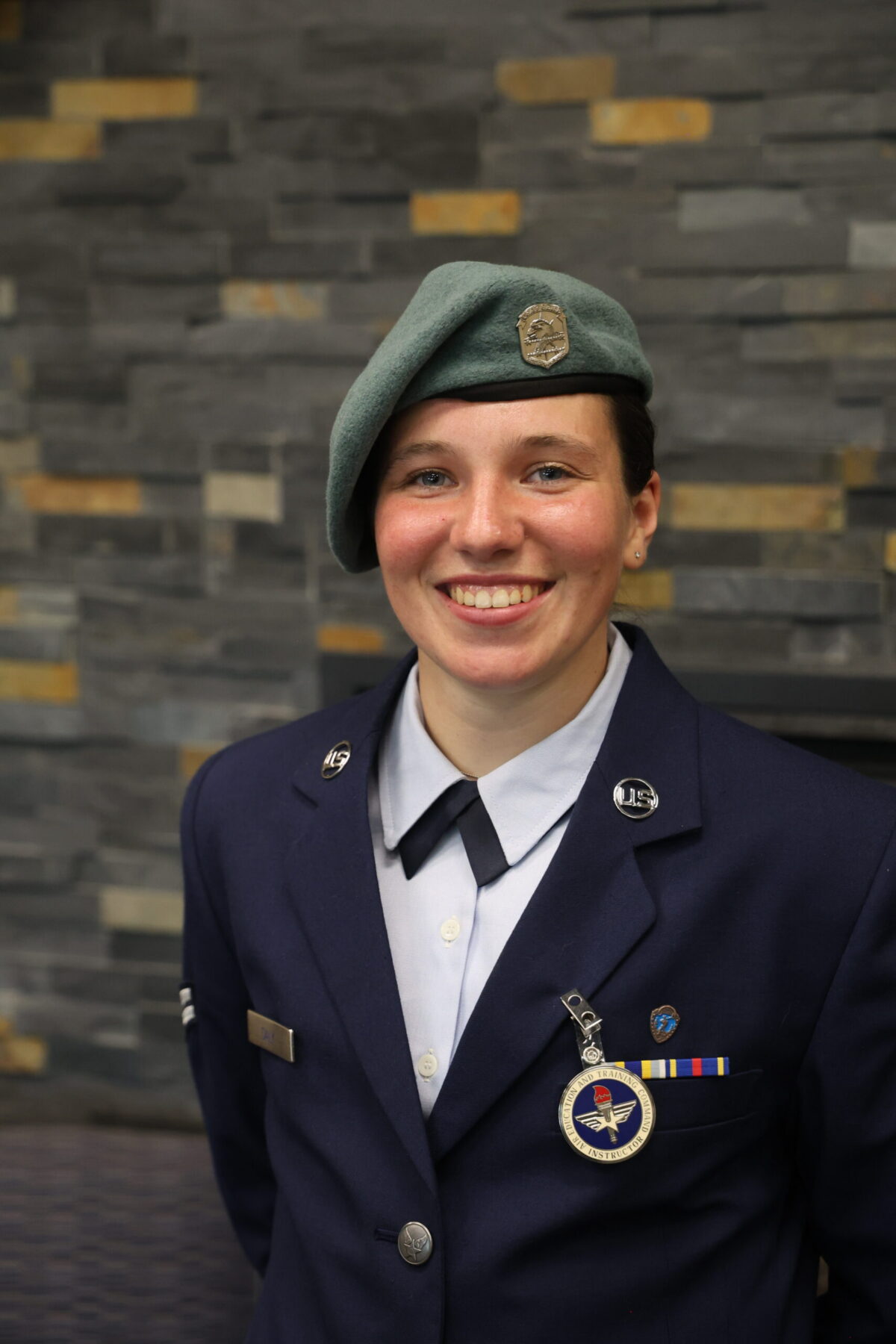
Ciely Daly

The outdoor program and humanities tracks were particularly dear to me at Wyoming Catholic. It was in the outdoors that I most recognized the importance of an integrated, pillared approach to self- development—body, mind, and spirit. We need all three to thrive, or, when challenged greatly, simply to survive.

Isaac Owen

After graduating from Wyoming Catholic College, I worked for a variety of nonprofit organizations in think tanks and politics before putting my talents to work on behalf of the Catholic Church, first in Michigan and now in my native Oklahoma. I currently serve as Director of Development for the Diocese of Tulsa and Eastern Oklahoma. Since graduating, I have helped raise and steward over $25 million for various organizations and causes.

But the real key to whatever success I have had did not begin in an office or a fundraising seminar. It started at Wyoming Catholic College. Education at WCC seeks to teach students to see with eyes open to the world. WCC taught me to look at the world and at people with wonder. I learned to encounter each person as someone made in the image and likeness of God, and that vision has shaped how I listen, connect, and invite others into the mission of the Church. When you have learned to see reality, you learn to see people in the same way. They become gifts rather than instruments, and mysteries to be encountered rather than tasks to be managed. That shift, more than any technical skill, has made me a better fundraiser and a better servant of the Church.

At WCC, both the classroom and the wilderness teach you to see the world as enchanted. This is not a superstitious enchantment but an openness to truth, beauty, and goodness that reveals God’s presence in all things. Whether it is reading Dante under the stars, celebrating Mass on a remote mountain peak, or sharing a late-night conversation with a friend who will someday be the godfather of your child, WCC forms you to experience the world as it was truly meant to be.

This vision carries into every aspect of my life now. It allows me to approach each person I meet with genuine curiosity and deep respect. It allows me to speak about the Church’s mission not as an abstract cause but as a living reality that has shaped me. It allows me to invite others to join that mission, not through pressure but through shared purpose and shared hope.

The magic of WCC is not an escape from the real world. It is preparation to engage the real world with clarity, love, and a sacramental imagination. And that continues to guide my work every single day.

Sofia Piliero

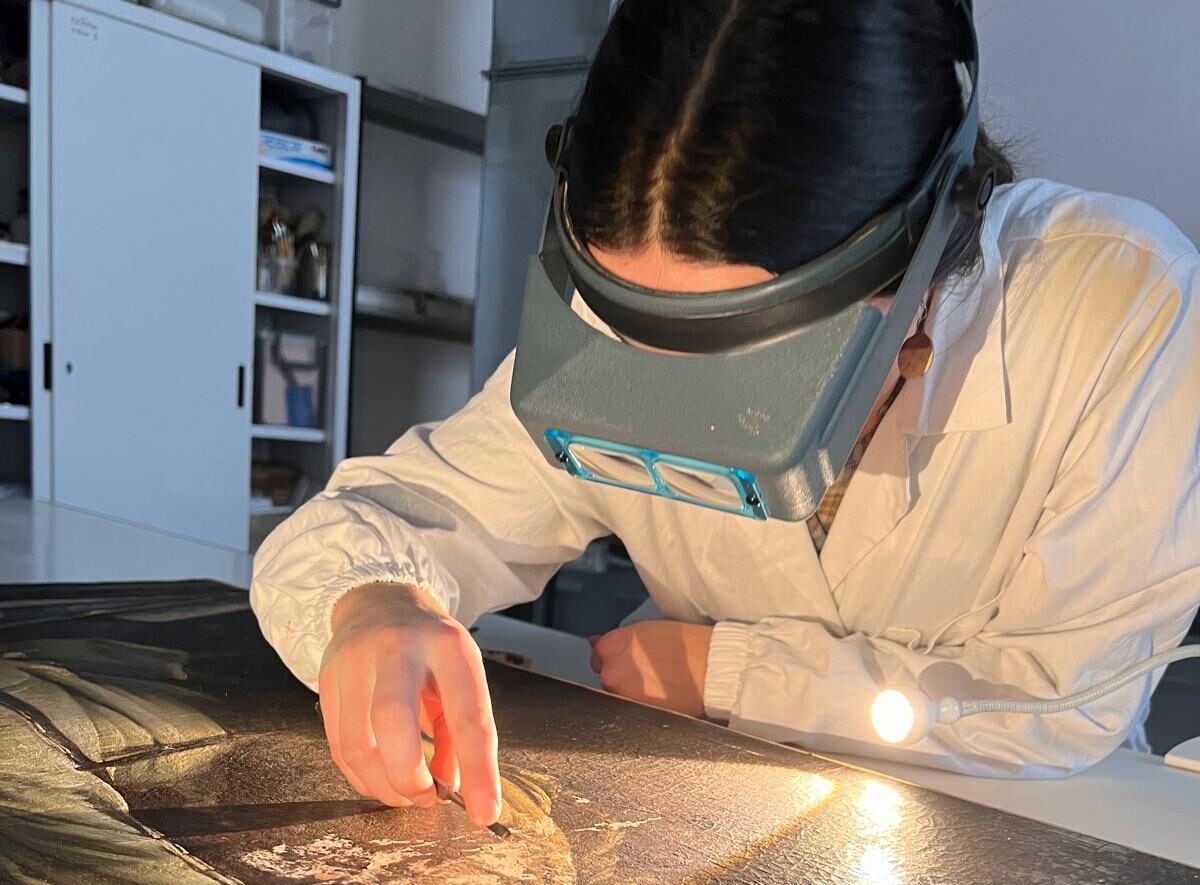
I am forever indebted to the arts curriculum at Wyoming Catholic College. My background in the liberal arts has provided me with invaluable context to understand the pieces I have worked on in their historical moment.

Studying under professors like Dr. Jeremy Holmes provided an enriching encounter with the arts. Although limited, it was a wonderful introduction to art history that went far deeper than mere familiarity with dates, artists, and pieces but actually explored the cultural atmosphere in which these works were created.

To be an artist in any capacity or to work alongside art requires a sensitivity to the humanities that a liberal arts education will develop. The spiritual and intellectual formation that I received at Wyoming Catholic College was an invaluable foundation. Practically, the academic rigor of my undergraduate education prepared me to excel in my higher studies. The seminar-style classes were indispensable practice in the art of synthesizing ideas and collaborating in the pursuit of a common understanding.

Most importantly, Wyoming Catholic provides a space to develop a rich interior life from which a sensitivity to beauty arises.

Read more about Sofia’s experience and work in “The dynamic process of integrating art and science:” Art Restoration and Culture With Sofia Piliero (‘23).

Chassidy Menard

I’ve always had an interest in public policy as an essential tool to create a society where people can be good. Throughout college, I interned for United States Senator John Barrasso, Women Speak Out PAC, and Americans United for Life, and so returning to the “public policy space,” where I am now, was a natural fit. I became Grants Manager in January 2023, after being promoted from the position of Development Writer.

Throughout your time at Wyoming Catholic, students must read great texts and, in humility, ask and understand first what the author has to say before deciding what I have to say in response. Those experiences helped to refine my listening skills, taught me to ask better questions, and made me more comfortable being uncomfortable. And I developed strong writing, project management, and communication skills because of the academic rigor of the College, which has been critical to my current role.

There’s a lot to love about Wyoming Catholic, but the professors are my most enduring, most beloved part of the college, preparing me in so many ways for what I’m doing now. From writing skills and philosophical background to fostering a love of poetry that has provided shape, direction, and meaning to my life. Additionally, they revealed a vision of an incarnational Catholic Faith that I had always longed for but didn’t know existed. Most of all, they showed me mercy, and in the words of Owen Wister’s Virginian, “They thought more of me than I deserved, and that made me behave better than I naturally wanted to.”

Jacob Zepp

We live in a liturgical epoch. Each age can be characterized by the theological questions the councils address, and the restoration of Christian culture will be founded upon the liturgical life of the Church. I am living the liturgy myself and with my family. I strive to help make the liturgy known as a place of worship—an encounter with the Divine.

My career path has been developing my whole life. Growing up, we frequently attended daily Mass, which helped foster in me a love of the liturgy. While at Wyoming Catholic College, I served as the campus sacristan and studied the greatest things that have ever been thought. My love of the liturgy continued to grow with easy access to daily Mass, and my intellectual appreciation reached new bounds when I wrote my thesis on the history and theology of the liturgy. This led me to continue my liturgical studies and pursue an M.A. at the Catholic University of America.

My professors lived very inspiring lives. They showed how ‘knowledge jobs’ can lead to happy lives. While I have seen that many academics are consumed by the need to publish many articles each year and are alienated from their families, at WCC, I saw another story. I witnessed happy families in academia. One professor’s wife would read Latin with us in the evening, and then she would run her husband coffee the next morning as he was starting class.

As a high school student, I did not feel the need to get a specialized degree. Instead, I wanted human and spiritual formation, something I could use in any walk of life. Rather than spending four years training to get a job, I wanted to spend four years training to be an excellent person. As a freshman, I ascended the staircase to the dean’s office to ask him for study advice. I wanted to learn how to focus and succeed as a student. This was a skill that the dean had certainly mastered and a skill that I would certainly need to master if I was going to keep up my assignments. It is certainly easier when you don’t have Wi-Fi and a phone—focus is a skill that is hard to learn in the modern world.


Henry Christopherson

I could write about all the ways that this college made me a better thinker, problem solver, and communicator. And how those skills have served me greatly in the work-a-day world and how this great liberal arts education has positioned me well to “maximize shareholder value.” I should not underestimate the gift of being able to earn a living and provide for a family. I credit WCC immensely by putting me through a 4-year crucible of intellectual and moral conditioning, out of which came a sharper and more competent person. There is no doubt about that. But to say, “because of WCC, I have a great job and am making a difference in the word” however true, almost cheapens what actually happened there.

What really went on here was a type of soul-craft, a re-tuning of the heart to love what is true, good and beautiful. As we all remember, Plato taught that the mind rules the stomach through the chest. Our intellect alone does not have the power to control our emotions and appetites, but it needs an ally in the heart. C.S. Lewis in his Abolition of Man laments the lack of heart in our society saying, “We make men without chests and expect from them virtue and enterprise. We laugh at honor and are shocked to find traitors in our midst.”

Wyoming Catholic College rebuilds the chests of its students. Our imaginations are formed by the breathtaking landscapes of Wyoming. Our consciences are shaped by studying the moral lessons of history. We don’t just learn to recognize what is true, good, and beautiful—we fall in love with them. And then for a rare moment you catch a glimpse of what Solzhenitsyn calls, “that which passeth all understanding, a realm to which no man can ride or fly. And for which the soul begins to ache.”

In that moment, you know you have everything you need: to sustain yourself, to make a difference, to pursue virtue, and to live fully.

John Gassner

Initially, I did not want to go to college at all. I wanted to join the Marine Corps but my dad told me: “If you’re gonna get shot at you ought to go to college and become an officer—you’ll make more money doing so.” I begrudgingly attended Wyoming Catholic College’s PEAK summer program, and was blown away with the caliber of the upperclassmen leading it. I knew I needed to have whatever nameless quality they had about them. I was hooked.

The entire experience at Wyoming Catholic is so rich and intertwined that it is difficult to parse out its separate elements. Much of it was challenging for me, but in retrospect I wouldn’t have had it any other way. Without a doubt, my favorite aspect was the people, especially my classmates; the sheer breadth and intensity of shared experiences has gifted me with intense friendships. To be honest, I struggled with academics the entire four years I was there, and it was those friends that pulled me through.

Food had always been a thing that my family shared as a way to communicate, but I never really cooked until I attended PEAK. There, I discovered the satisfaction of preparing a meal while starving in the backcountry—we dumped all our ingredients together to create a Mac and Cheese. That act of creating something spectacular from not a whole lot spurred me on and I went home and asked my mother to teach me how to cook. This continued with various food service jobs in college.

My dream was to start a food truck and eventually a restaurant, but I realized that high quality baking was in highest demand. I currently bake what I believe to be the highest quality, best tasting and best looking breads in my corner of Virginia, under the name of Working Man Bread Co. The focus is working towards the motto “bread with integrity” and I work hard to source local, healthy ingredients. We do farmers markets on the weekends and during the week supply about 16 restaurants and stores with a select number of specialty breads.

Ultimately, I want to combine the principles of classical western tradition with the fundamental nourishment of food in an exciting way that creates room for honest conversations: a bakery space for food and hospitality.

It’s an unusual path I’ve taken, but I’d say that is all the more reason to have a foundation in a classical education. You learn how to learn, and that is one of the most fundamental skills one can have. I hope that anyone who attends Wyoming Catholic is also able to have the intensity of experiences, richness of culture and bonds of friendship I have been fortunate enough to receive.

Joseph Spiering

One of my favorite things about Wyoming Catholic was the attention that even a single student got from the staff, faculty, administration. You could see everyone you wanted to at lunch—you and a group of students could find yourself talking to the president, or to a theology professor, or a classmate and have a truly profound conversation.

Wyoming Catholic offers its students the opportunity to be part of this ‘great conversation’ of civilization through reading the Great Books, experiencing the outdoors, and being immersed in the heritage of the Catholic faith—something that Christ gave us to start with, that has been reinforced from ancient times to now, and that I look forward to passing on to my children in the home.

My liberal arts education has helped me most directly in seeing the whole picture of life: it drives you to look at the whole picture, not just at one field such as biology or literature, but all of man and the world. This is especially true of Wyoming Catholic’s outdoor program. I would say that when it comes to the market, portfolio, or estate management, this education helps you keep the whole thing in mind, and ensure all the parts are united towards the goals.

The docility I learned at Wyoming Catholic College has served me well, and has made me teachable in all the different career areas I’ve been blessed to explore since my time in Lander.

Joseph furthers discusses his time at the College and his experiences in the workforce after graduation in an article produced for the College’s website: “From Farming to Finance:” Joseph Spiering (‘11) on Finding His Career Home.

Samantha Stancliffe

I think a Liberal Arts education becomes ingrained, if we let it, in our minds and hearts; it becomes a part of our person. In that way it is very much like our Catholic faith; if we are living it well, it speaks for itself. That has been my experience with employers and clients. Even when someone doesn’t quite understand the Liberal arts degree or why a person would choose it, they generally appreciate the qualities that accompany it.

I have never felt that there was a specialized task required by an employer or client that I couldn’t manage. The desire and ability to continue learning is one of the great gifts of this education. it is the non-technical training of the lady and the gentleman that is so lacking in our day that makes Wyoming Catholic College’s approach uniquely valuable.

Liberal Arts education calls its students to a pursuit of what is good, true, and beautiful. [It] reminds us, like our favorite wizard, that this time is all we have! And it is up to us to do something good with it. It is our turn to continue the story of human life and thought, and contribute something meaningful and lasting to the great tradition we have been privileged to receive.

Like every other field, the field of midwifery desperately needs good Catholics, or at the very least, rational women who are not rabidly trying to overturn the very meaning of natural law. That presence is what I try to bring, right now to my studies, and (God willing!) soon to my clients and colleagues.

For more on the way that Samantha’s career and life have been shaped and transformed by her time at Wyoming Catholic, read her article from the College website: “From Music to Midwifery:” A Conversation with Samantha Stancliffe (‘17)