“Another Day to Contemplate His Glory,” by Fr. Matteo Invernizzi, F.S.C.B.

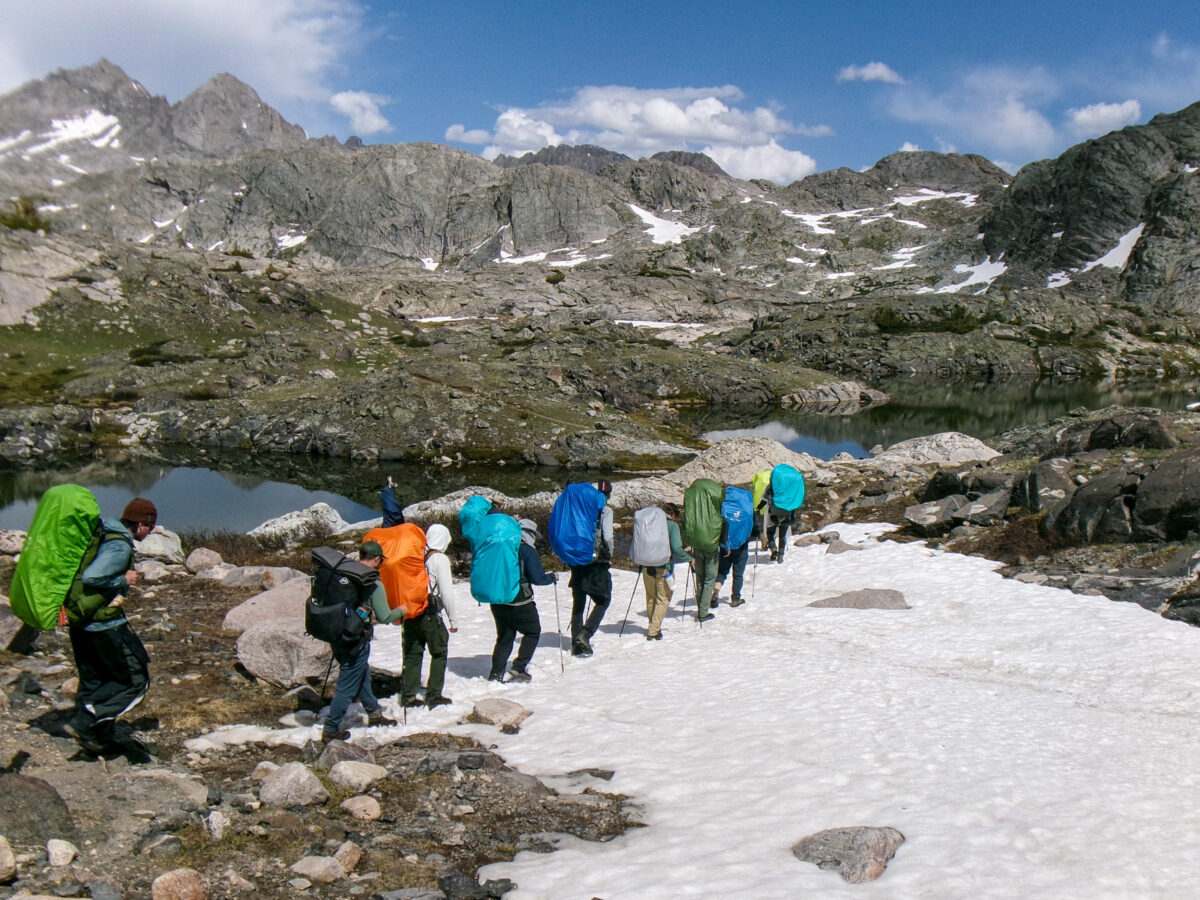
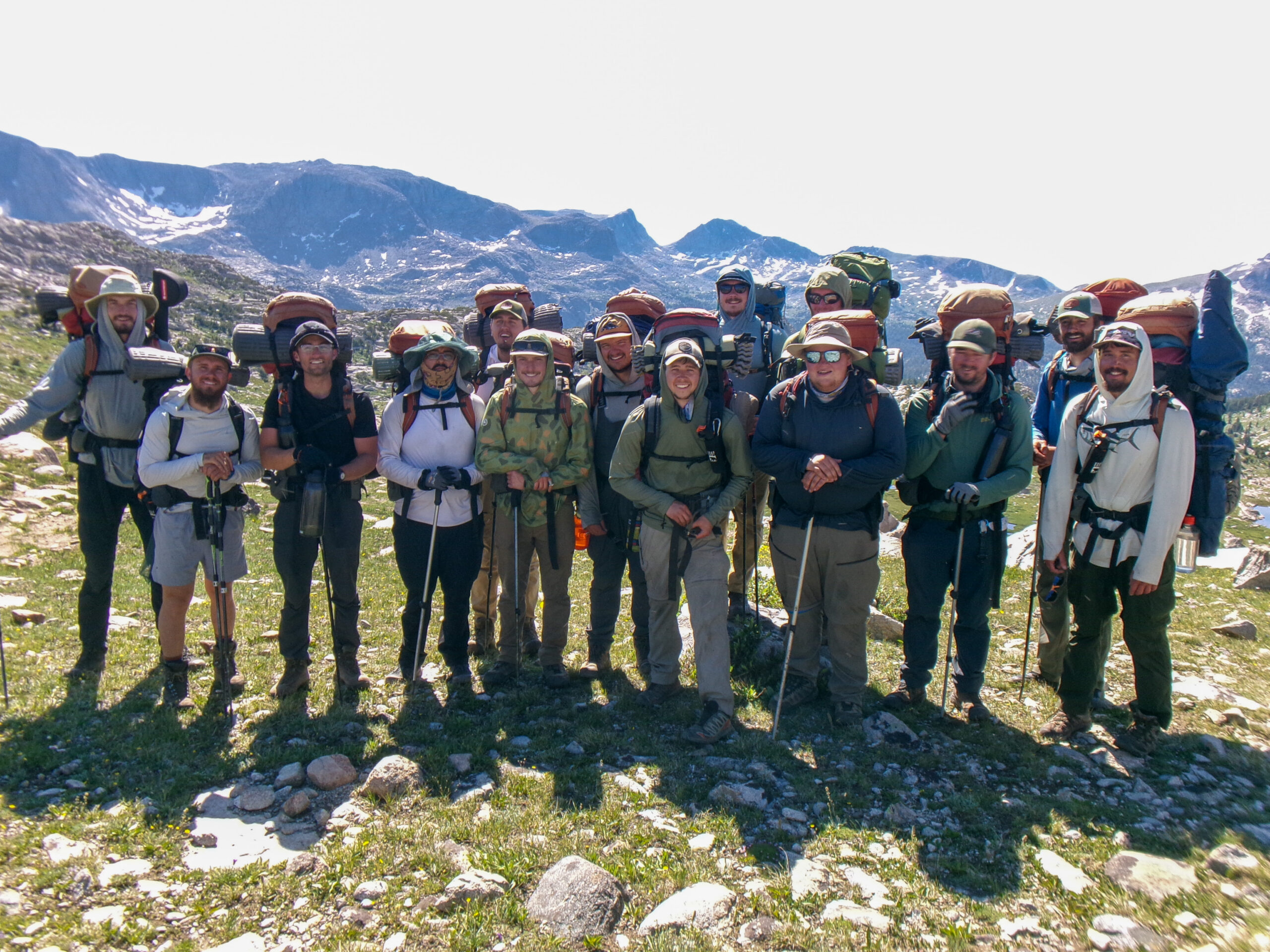
Father Matteo Invernizzi, currently serving as Parochial Vicar of Nativity of Our Lord Parish in Broomfield, CO, was the chaplain for the recent 21-day trip undertaken by a group of young men from the Archdiocese of Denver’s St. John Vianney Theological Seminary. The trip is becoming an annual tradition, undertaken by members of the Seminary who are completing the Archdiocese’s famed Spirituality Year. In partnership with WCC’s outreach program, COR Expeditions, he and eleven seminarians spent three weeks in July hiking through Wyoming’s gorgeous Wind River Range. Below, some reflections Father Matteo wrote upon returning from his time in the Winds.
Have you ever considered backpacking in the wilderness for 21 days?
Before last December, I hadn’t. It sounded crazy—and definitely intense. Nonetheless, it is exactly what the Archdiocese of Denver offers the seminarians in their Spirituality Year at the end of their formation. In partnership with COR Expeditions, a Catholic outdoor organization based in Lander, Wyoming, eleven young men spent three weeks in July hiking through the Wind River Range Wilderness with 60-pound backpacks, accompanied by three guides and a priest. That priest was I.
We drove from the seminary in Denver to Lander, Wyoming, on June 28. Once we arrived, we were assigned rooms in the dorms at Wyoming Catholic College and looked around for the cafeteria. Instead, our guides informed us that for the next 21 days we would be cooking every meal ourselves using camp stoves and bags of dehydrated food provided by the organization. Every six days, our food supply would be replenished by a mule train deep in the wilderness.
Meanwhile, the seminarians split into three teams and cooked their first dinner: macaroni and cheese with beans. The rest of the food wasn’t much different: pasta, rice and flour for a delicious pizza in the frying pan…
The following morning, we began a routine that would last for the entire expedition: Mass at 6:30 am, followed by a Holy Hour, breakfast, and then training. For three days we completed Wilderness First Aid (WFA), CPR certification, and learned all the regulations and safety protocols necessary for backcountry travel: bear mitigation, lightning procedures, river crossings, and much more.
The anticipation—and the anxiety—for the upcoming trip grew day by day. We spent our final day, July 1, checking our gear and packing the food we would carry on our backs for the first week until the next resupply.
On July 2, we reached the trailhead at New Fork Lake, where our adventure officially began. It was already late afternoon, so we planned to hike only a few miles before making our first camp. Unfortunately, the designated campsite turned out to be a swamp filled with fallen trees.
 As soon as we started cooking dinner, a violent lightning storm hit. For more than an hour we stood on top of our backpacks while rain poured down from above and water rose beneath our feet. When the storm finally passed, we were soaked and cold. Thankfully, we found a dry campsite not far away and were finally able to pitch our tents for the night.
I often thought about that first night during the days that followed. It truly was a baptism by fire and water. God tested us and asked us to trust Him as He led us through one of the most dangerous experiences one can face in the wilderness: a lightning storm. He kept us safe and showed us that He was walking with us.
The following morning, we celebrated Mass as the sun rose before us. It was a beautiful reminder that God had given us another day to contemplate His glory.
Over the next several days, we climbed to higher elevations. Most of our campsites were above 10,000 feet, where we constantly purified water from streams and lakes and continued learning the skills necessary to thrive in the backcountry. The nights were cold, and on a couple of occasions I woke to find icicles hanging inside my tent. The days, on the other hand, were hot and dry, so we carried two full water bottles and refilled them whenever possible.
Each day, two seminarians were appointed Leaders of the Day (LODs). Their responsibility was to plan the route, assess the risks, and safely lead the group to the next campsite. To develop their confidence, the guides would occasionally encourage them to leave the established trail or attempt the ascent of a nearby summit. At first, these challenges seemed impossible. Yet trusting the guides allowed everyone to discover strengths and abilities they did not know they possessed. After the first week, the weight of the backpack became more manageable. Blisters continued to form, but they no longer affected our morale as they had during the first few days. Slowly, we found the rhythm of the pilgrim.
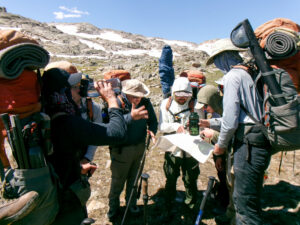 We rose at sunrise, offered the first fruits of the day to the Lord through Mass and Eucharistic adoration, walked until evening, and repeated the same pattern the next day.
Twice each day, during lunch and dinner, one member of the group shared a deeply personal witness. For me, these talks became the highlight of the entire expedition. Each of us spoke about our past, our vocation, the struggles and consolations we had experienced, and our hopes for the future. Day by day, the bond among these young men grew stronger.
On July 11, we stopped at Elbow Lake, at an elevation of 10,800 feet. Jacob, the leader of the expedition, announced that we would have 24 hours of Eucharistic adoration. I exposed the Blessed Sacrament, and we maintained silence for the entire day while the seminarians took turns keeping watch before Our Lord.
During the shift in the middle of the night, the sky was so filled with stars that they reflected clearly on the surface of the alpine lake. It was an unforgettable experience of grace and beauty.
By the final five days, the seminarians had acquired all the skills needed for their last challenge: independent travel. They had to submit their travel plans and campsite locations to the guides in advance. Then the guides and I withdrew, allowing them to travel on their own throughout the day, meeting them again only for Mass the following morning.
Of course, we remained close enough to ensure their safety, and occasionally we could hear their voices. But for most of the day they were entirely on their own, responsible for navigating, making decisions, and leading one another.
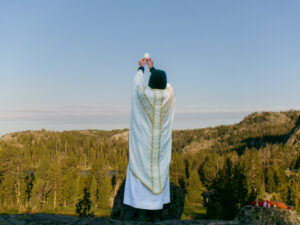
In many ways, this was the purpose of the entire experience: to give these young men the confidence and skills to take ownership of their own lives, to step forward as leaders, to correct one another with charity, and to strive for excellence together. Watching them embrace this responsibility with joy during the final days was deeply moving.
It was also the period I enjoyed the most because it gave me more time for prayer and personal reflection. It’s the joy of a father who sees his children growing up and ready to assume their responsibility in the world.
On July 18, we finally reached the Boulder Lake trailhead. In seventeen days on the trail we had hiked a total of 74 miles. We lost more than a few pounds, but we deepened both our friendship and our commitment to God. We returned scratched, dusty, and smelling far from pleasant. Yet our smiles were bright, and our hearts were light.
I will always be grateful to God for the opportunity to accompany these young men on their journey toward the priesthood through such an extraordinary experience. Although my primary role was to celebrate the Eucharist and provide spiritual support, I found myself growing alongside them, carrying the same burdens and receiving the same consolations.
The experience reminded me of my years as a formator in the seminary. Leadership is never exercised from a distance. You lead by example. You carry the burdens of those entrusted to your care, and in doing so, you discover that Christ has been carrying yours all along.
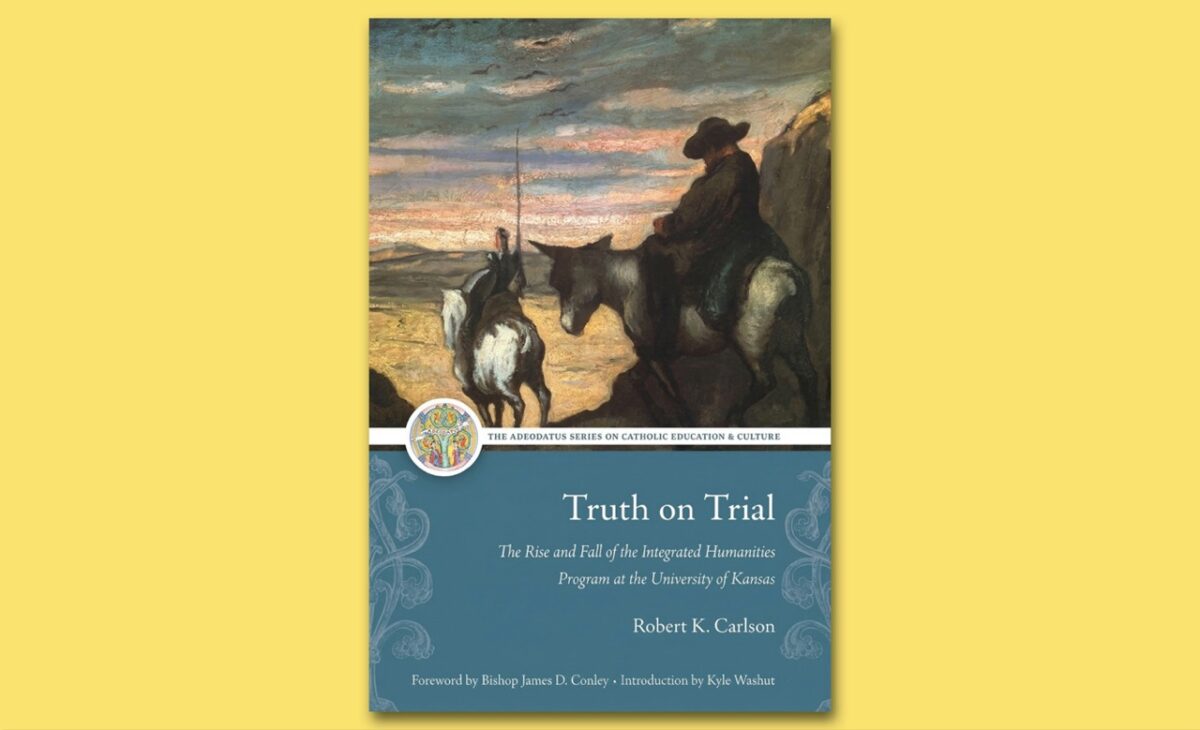
 Thanks to the work of Wyoming Catholic College’s good friends at
  Launching in the early 1970’s, the IHP was the “Great Books” brainchild of a trio of KU professors—Dennis Quinn, Franklyn Nelick, and John Senior—who understood that wonder is not only the beginning but also the sustaining principle of the best education, and who sought to offset the radical disintegration permeating Western culture in general and higher education in particular. Convinced that the fragmentation of such major cultural institutions as the family, the church, and the world of education was profoundly affecting students, these three teachers invited freshmen and sophomores at the public university to join their fledgling program, where they would study, hear, and discuss the classics of ancient and medieval literature, listen to their professors converse on “the greatest that has been thought and said,” memorize poems, stargaze, take courses in Latin and rhetoric, and much more.