|
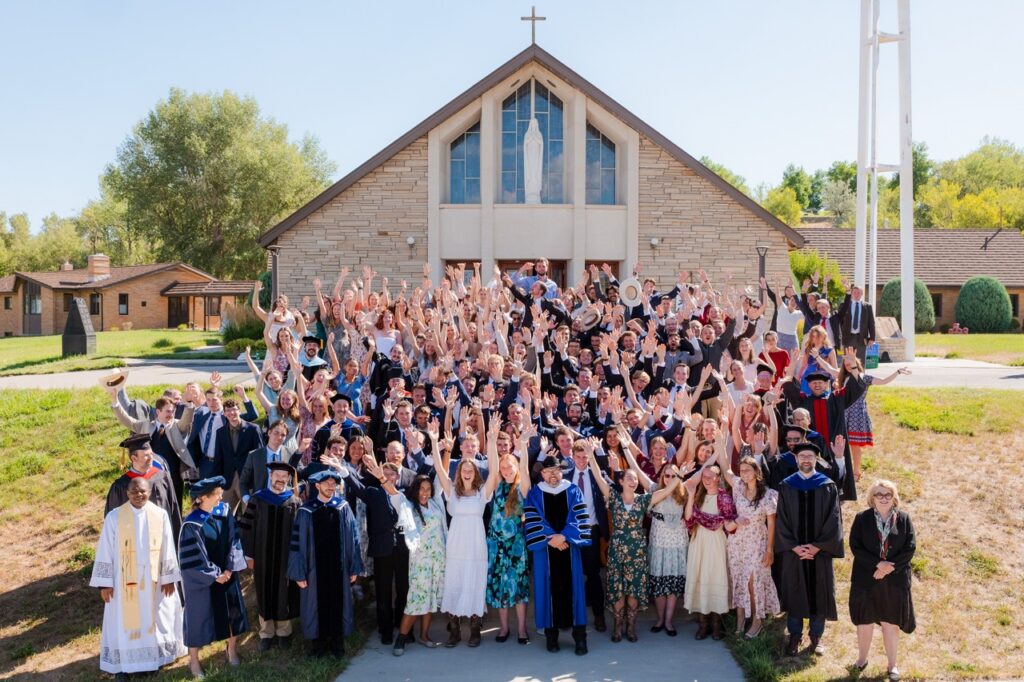
 Many WCC alumni will tell you that their favorite memories happened “in the Pequod.” While you might think this means they spent too much time reading Moby Dick, they are actually referring to WCC’s community bar/music room/card playing den/impromptu seminar hall. It is hard to give a title to this space (a former barber shop behind our main classroom building) because of the variety of its functions. It is the heart of the WCC community–a place where students, faculty, and staff gather to discuss anything from Dante’s Divine Comedy to the latest triumph of the class of 2024 in the school-wide Euchre tournament. Many WCC alumni will tell you that their favorite memories happened “in the Pequod.” While you might think this means they spent too much time reading Moby Dick, they are actually referring to WCC’s community bar/music room/card playing den/impromptu seminar hall. It is hard to give a title to this space (a former barber shop behind our main classroom building) because of the variety of its functions. It is the heart of the WCC community–a place where students, faculty, and staff gather to discuss anything from Dante’s Divine Comedy to the latest triumph of the class of 2024 in the school-wide Euchre tournament.
|
|
|
|
|
|
|
|
|
|
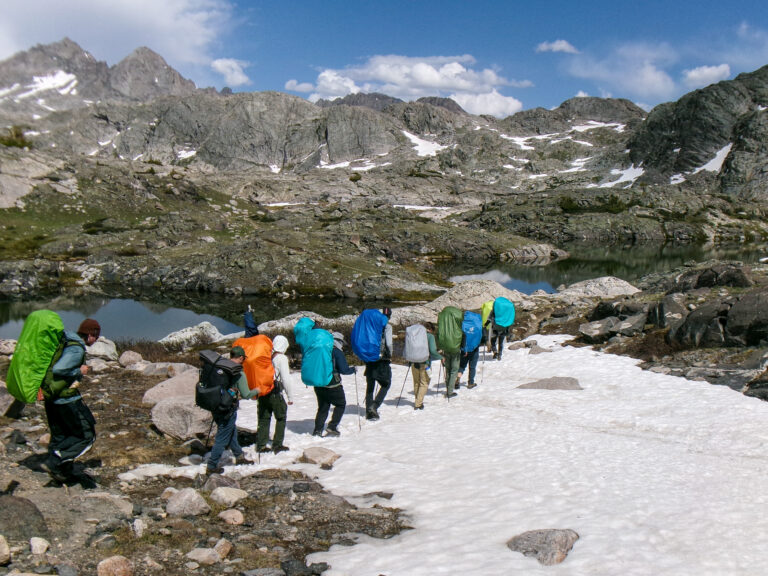
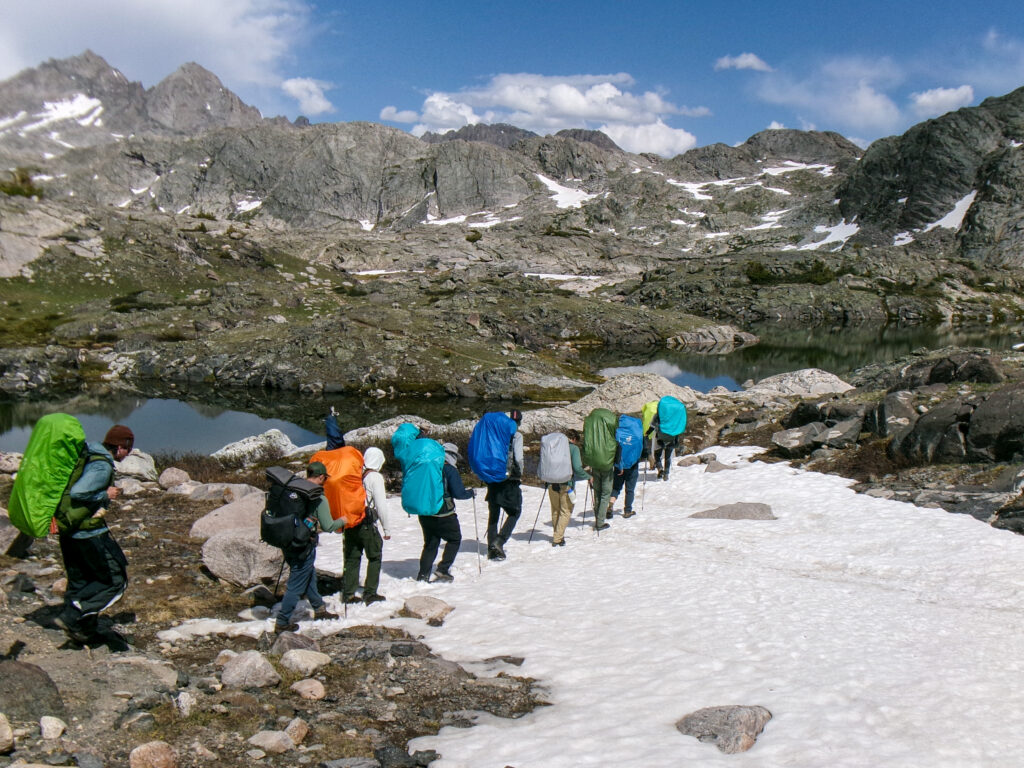
The admissions newsletter is meant to give you a glimpse of this “heart” of our community, and hence our new name. In this first report of the season, we are reminded yet again of the pioneering character of Wyoming Catholic College. This newness and radical difference of our mission was highlighted recently when I represented WCC at a college fair. I stepped into a large meeting room where around 50 college reps were setting up their tables. A few hundred students started shuffling around the room, stopping by various vendors of educational values. I realized during the course of this fair that I was, in a real sense, alone in that room. Surrounded by 49 tables peddling the same generic education with accidental differences in flavor and size, I was the only representative selling an entirely different intellectual meal. Most students would come to my table having heard 10 pitches from other colleges about glamorous business programs or AI integrations, only to hear the words from my mouth, “At WCC, all of our new students are required to backpack for 21 days in the Rocky Mountains before taking any academic classes.”
I always glance up during this point of my pitch to see how far my listeners’ jaws have dropped. Some students immediately light up when I mention our Outdoor Program, stepping closer to my table and asking to hear more about WCC. Some students recoil when they hear “21 days in the wilderness” and quickly end the conversation to explore more “mainstream” schools. The dividing line between these two reactions seems to be that some students approach my table with a glimmer still surviving in their eyes—a spark of wonder and hope about life—while many others approach with their noses in the air, their phones in hand, and their materialistic life plan already in mind.
To both audiences, I am ultimately forced to present WCC as something different, as offering a fundamentally distinct message that cannot be found at the 49 other tables in the room. Indeed, the separation is such that common terminology fails. WCC cannot be made to fit the modern usage of the term “college,” which has come to signify a campus vaguely unified by some generalized tagline or cliche, but without any true cohesion in the spiritual goods of man. When we say Wyoming Catholic “College,” we mean something almost unrecognizable in today’s world. We are not concerned with forming more cogs for the growing machine, who will merely propagate the age-old idea that man is no more than a clever animal. WCC is an institution of higher learning aimed at the formation of the whole human person, who is acknowledged to possess intellectual, imaginative, and physical dimensions in a hylomorphic union.
This integrated approach is the truly “pioneering” spirit of Wyoming Catholic College. It just so happens, however, that our college is located in the heart of the historical frontier, where only a few decades ago real-life pioneers blazed the trail for the expansion of the West. Our location is not accidental. WCC’s pioneering goal contains an essential connection to the cowboy tradition of the western frontier. Apart from the gunslinging, vulgar reputation he has acquired through the vicissitudes of Hollywood, the cowboy is, at bottom, a man who has made his profession the raising and selling of cattle. Anyone who knows the vast grazing grounds of the Wyoming prairie knows that this trade requires an intimate connection with the land–a fruitful surrender to the workings of nature and the environment. The cowboy must also maintain a dynamic, intense relationship with his mount, whom he uses to exert his will upon the herd. Horsemanship, of a kind seldom seen in history before the American West, is required of the true cowboy. The pioneering cattleman must also brave the very worst of nature’s elements, in both stifling heat and bitter cold. His life is a life of service, dictated by the well-being of his herds and the demands of the market. There are no “working hours” for the cowboy.
Where this figure still survives, having not been replaced by city-dwellers on four wheelers or machines in feedlots, he often possesses a unique combination of virtues unparalleled in post-industrial society. The true cowboy is a man of remarkable strength, both of body and character. He is a man who loves the land, who is capable of leading natural creation, who has a confidence in himself rooted in a history of perseverance and solidity, and yet who has no pretentiousness–likely thanks to a few very short bull rides.
Perhaps there is no sphere of life more lacking of these “cowboy virtues” than the academic sphere. The stereotype of the “scholar” is one of effeminacy and intellectual acuity at the cost of physical and moral well-being. Your typical nerd might know many truths, but often lacks the ability to manifest those truths in a courageous manner of living. This is precisely why Wyoming Catholic College seeks to unite these disparate ways of life. We seek to be cowboy scholars, or more wisely put, we seek to understand the world around us in a manner that does not distance us from that real world.
Our academic program awakens students to the lofty heights of abstract Philosophy and systematic Theology, but it also makes them spend weeks at a time sleeping under the stars with only a sleeping bag and a tarp. It has them study deeply the intricacies of Genesis and the story of man’s fall from Eden in a classroom, while also having them explore their proper, Edenic relation to animal creation in an arena by riding and caring for horses.
In the end, WCC’s pioneering program of study reveals that the excellence of the body and spirit of man need not come at the cost of his intellectual development. Quite the opposite, the mind and body of man can be properly formed only in relation to each other. A scholar who is all books and no life is not truly wise, and a man who is all brawn and no insight has no real strength in him. The true ideal of education, and the ultimate key to a happy, fulfilling life, is a well-rounded formation. WCC seeks to produce graduates who are insightful, robust, joyous, and full of life. Clad with their WCC black Stetsons, they pursue the good life with virtues of both the intellectual and active spheres–thinking, loving, and living fully in Truth, Goodness, and Beauty.
|
|
|
|
|
|
|
|
Applications Are Open!
As of September 1st, WCC is officially reviewing applications! With our rolling admissions model, we review applications as we receive them. This means that the earlier the better! Apply now to maximize your chances for admission! The WCC application requires high school transcripts and a standardized test score, so make sure you start the process of collecting those! More details about application requirements are posted on our website.
|
|
|
|
|
|
|
Early Application Scholarship!
New this year! WCC is unveiling an early application incentive! If you complete your application by Oct. 15th, you will receive a $4,000 scholarship, which is renewable for four years! This offer will bring down your overall cost of attendance significantly, making WCC’s stellar education within reach of your financial budget. It is also stackable with other forms of financial aid, including our generous merit scholarships and work-study program. More details about the early action scholarships and our other financial offerings can be found in the link below.
|
|
|
|
|
|
|
Newman Guide Fair!
Join the WCC Admissions Team on October 9th (today!) at the Newman Guide Virtual College Fair! This event is a great opportunity for students and families to learn more about the faithfully Catholic colleges around the world. WCC’s team will be there to chat with participants and share more about the unique education happening in Lander. Stop by our virtual booth! To register, follow the link below.
|
|
|
|
|
|
|
Open House Programs!
The Admissions Team is excited to announce two Open House Weekends this fall! These weekends are ideal times for prospective students and families to visit our campus and get a taste of life at WCC! Participants will audit classes, stay with students at the dormitories, experience an outdoor adventure with our Outdoor Leadership Program, and have frequent opportunities to ask questions to our admissions staff and college faculty. This program will be hosted Oct. 16-19th and Dec. 4-7th. Sign up now!
|
|
|
|
|
|
|
Student Spotlight! – Samuel Liebler (’28)
|
|
|
|
|
|
|
|
|
 Bio: I was born in the city of Buffalo, and grew up in rural western New York where I spent my childhood either playing with legos or barefoot outside and my teenage years milking cows, doing landscaping jobs, and attending youth group. I loved reading whatever happened to be in the house, and camping and hiking with my father and brothers in Canada and the Adirondack Mountains. I am beginning my sophomore year at WCC by reading Aquinas’ Compendium, Aristotle’s De Anima, and Livy’s History of Rome. I sing in the school choir, and am leading a rock climbing trip this fall. Bio: I was born in the city of Buffalo, and grew up in rural western New York where I spent my childhood either playing with legos or barefoot outside and my teenage years milking cows, doing landscaping jobs, and attending youth group. I loved reading whatever happened to be in the house, and camping and hiking with my father and brothers in Canada and the Adirondack Mountains. I am beginning my sophomore year at WCC by reading Aquinas’ Compendium, Aristotle’s De Anima, and Livy’s History of Rome. I sing in the school choir, and am leading a rock climbing trip this fall.
|
|
|
|
|
|
|
Q. What’s a class you’re taking right now that interests you?
S.L. Philosophy has always been fascinating, and even more so the philosophy classes at WCC. This semester my fellow sophomores and I are studying Aristotle’s De Anima (On the Soul) as well as Thomas Aquinas’ commentary and discussing what it means for something to be alive and what it means to be man. The process of reading and understanding is difficult as most of the concepts lie beyond imagination and in the realm of abstract thinking. The wonderful thing about this class is seeing how far human reason can bring me to the truth. Aristotle and Aquinas have revealed the order in God’s creation, an order that is waiting to be thought about and discovered.
Q. What is a surprising thing about WCC that you didn’t know as an applicant?
S.L. A surprisingly pleasant part of WCC I discovered is its music culture. The curriculum includes a music class for the freshman which introduces students to sight reading, some music theory, and singing various chants, hymns, and folk songs from the Western Tradition. This was the first serious encounter I had with learning music, and the joy that it brought is thrilling. WCC also has a great tradition of singing folk songs as well as having live music at parties and dances. I now am further pursuing sight reading by singing bass in the college choir, and taking up guitar to participate in the folk and praise and worship songs communities.
Q. What’s a fun/unusual thing you’ve done with your friends this semester?
S.L. Eleven students including myself went on a school trip to summit Wind River Peak, one of the highest peaks in the state of Wyoming whose summit is 13,197 feet above sea level. We started hiking on a Friday night at 9pm, and hiked 15 miles through the night and reached the peak at 8am Saturday morning. After a short while enjoying the spectacular view, we then hiked 15 miles back to our trailhead. I ate a lot of food, did not sleep, and saw the sun and moon both set and rise during the whole 22 hour period. and discovered how much I can endure mentally and physically.
Q. What do you see as the ultimate goal of your WCC education?
S.L. After spending a few years working in high school and the year afterward, I spent a year as a Catholic missionary to young people with NET Ministries, where I heard from a Dominican sister about WCC. The idea of the liberal arts education struck me as wonderful: the chance to study many works of theology, historical and poetic epics, the beautiful language of Latin, learn to ride horses and go on various outdoor adventures with a group of likeminded Catholics was something I could not let slip through my fingers. I have been pondering why such an education would be useful in today’s world, which seems to value highly trained specialists. What use could theologians and poets be? But this is how I see it: the education I am receiving at WCC will teach me to be truly human by studying and contemplating the mystery of God’s good creation (the world) and God’s very good creation (humanity). I wish to receive the knowledge imparted to me here, so that I may understand the magnificent truth that God is alive and wants very much for me to know him.
|
|
|
|
|
|
|
Join Us in Pursuing Wisdom in God’s Country!
|
|
|
|
|
|