September 27th, 2025
Feast of St. Vincent de Paul
 Dear Friends of Wyoming Catholic College,
Last month, Wyoming Catholic College made a brief appearance in the New York Times. In “Here’s What Happened When I Made My College Students Put Away Their Phones,” Dr. Ezekiel J. Emanuel, a physician and a professor of medical ethics and health policy at the University of Pennsylvania, noted that the trend to go cellphone-free “has not caught on in colleges and universities.” He added that “my searches have turned up just one small college, Wyoming Catholic College, that has banned mobile phones in the classroom.”
While it’s always gratifying to be featured in the Times (even briefly) and I’m always glad to call attention to our unusual technology policy, I was struck by how much more dramatic and transformative our actual policy is:
 It’s true that we don’t have mobile phones in the classroom. But that’s because we don’t have them on campus!
Since 2007, our students have fasted from their phones—in the classroom and out—for all four years, removing the distracting and damaging effect of the smartphone on social interaction and learning from our entire campus. Our students have come to us because they want a rich and truly human education; they learn to think deeply, communicate clearly, and to form authentic human friendships, free from virtual distraction. Our goal is not that our students will never use modern technologies again; rather, our goal is to ensure that their use of technology is defined by our community and by the culture we are creating for them, rather than allowing our students to be used by it.
Nowadays, our eager adoption of every new technology is shaping educational communities throughout America, rather than being shaped by them. And this misguided, permissive approach is having an absolutely devastating impact on an entire generation of young students.
 But not at Wyoming Catholic College!
As a direct result of our counter-cultural tech policy—counter-cultural in the best way!—our graduates are offering the world a path forward; a vision that places technology at the service of personal communication, attention, and careful reflection, rather than enslavement to the phone or the Internet or social media or the rapidly advancing AI revolution.
What was seen by some as a luddite approach nearly twenty years ago is now recognized as an educational advantage.
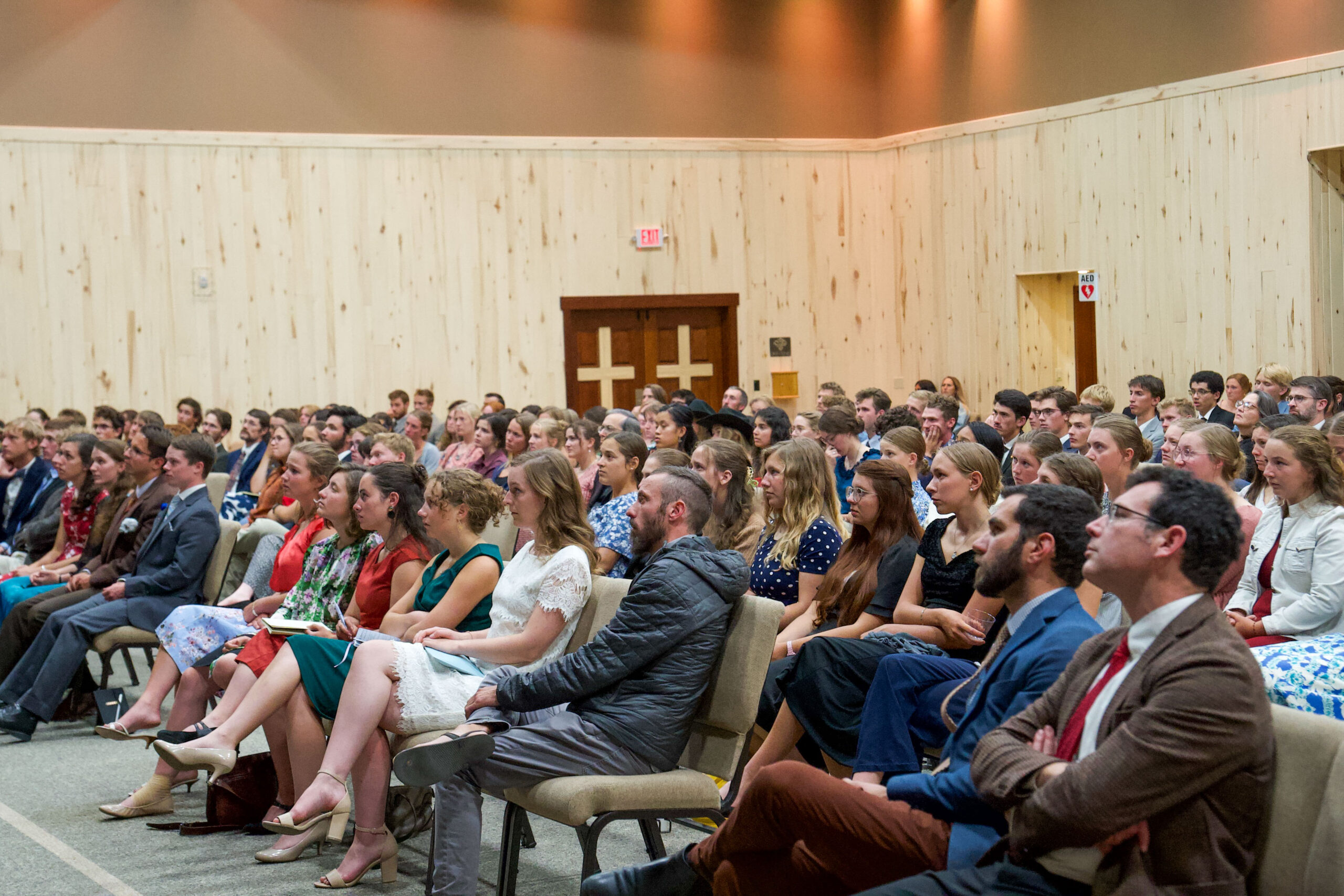
At the end of his article, Dr. Emanuel noted that “if bans on phones and computers in classes were widely instituted, students might learn more from their classes, be more willing to speak their minds in class, be more at ease in their social interactions and feel more fulfilled.” These words were echoed by our own Academic Dean, Dr. Scott Olsson, at this year’s Matriculation, when he reminded the newest members of the Wyoming Catholic College community that “the person who can pay no attention is doomed. Students, the only thing I ask of you is that you pay attention. Your new mother—your alma mater, Wyoming Catholic College—needs your attention. We do not want your attention to sell you something, unlike so much of the online world. We want your attention so that you can flourish!”
Pointing out the power of the College’s cell-phone free campus, Dean Olsson encouraged our students to go above and beyond the existing tech policy:
Attention is a finite resource. You only have so much of it. We need every life-saving drop of that dopamine for your Aristotle and Euclid.…social media is a waste of your time and, worse, of your attention. Let it go. If you aren’t writing a paper, leave your laptop in your room. Don’t check your email more than once a day. Agree to meet your friends without the group chat. Don’t listen to music unless you’re paying attention to it. Take breaks while you study, but when you take breaks, let your mind rest, don’t provoke it to a frenzy. Stay off the computer. Go for a walk. Sit quietly with a friend. Pray. Visit Christ in the Holy Sacrament.

Again, it’s not that we’re calling on our students to reject technology altogether. It’s that we have so much richness and so many opportunities to offer them while they’re here with us in Lander, and we need their time and attention so that they may truly flourish in this extraordinary community!
A few weeks after this memorable Matriculation ceremony, I had the extraordinary privilege of attending the joint canonizations of Saint Pier Giorgio Frassati and Saint Carlo Acutis. And I was struck by how clearly the lives of these two saints are reflected in WCC’s unique educational vision.
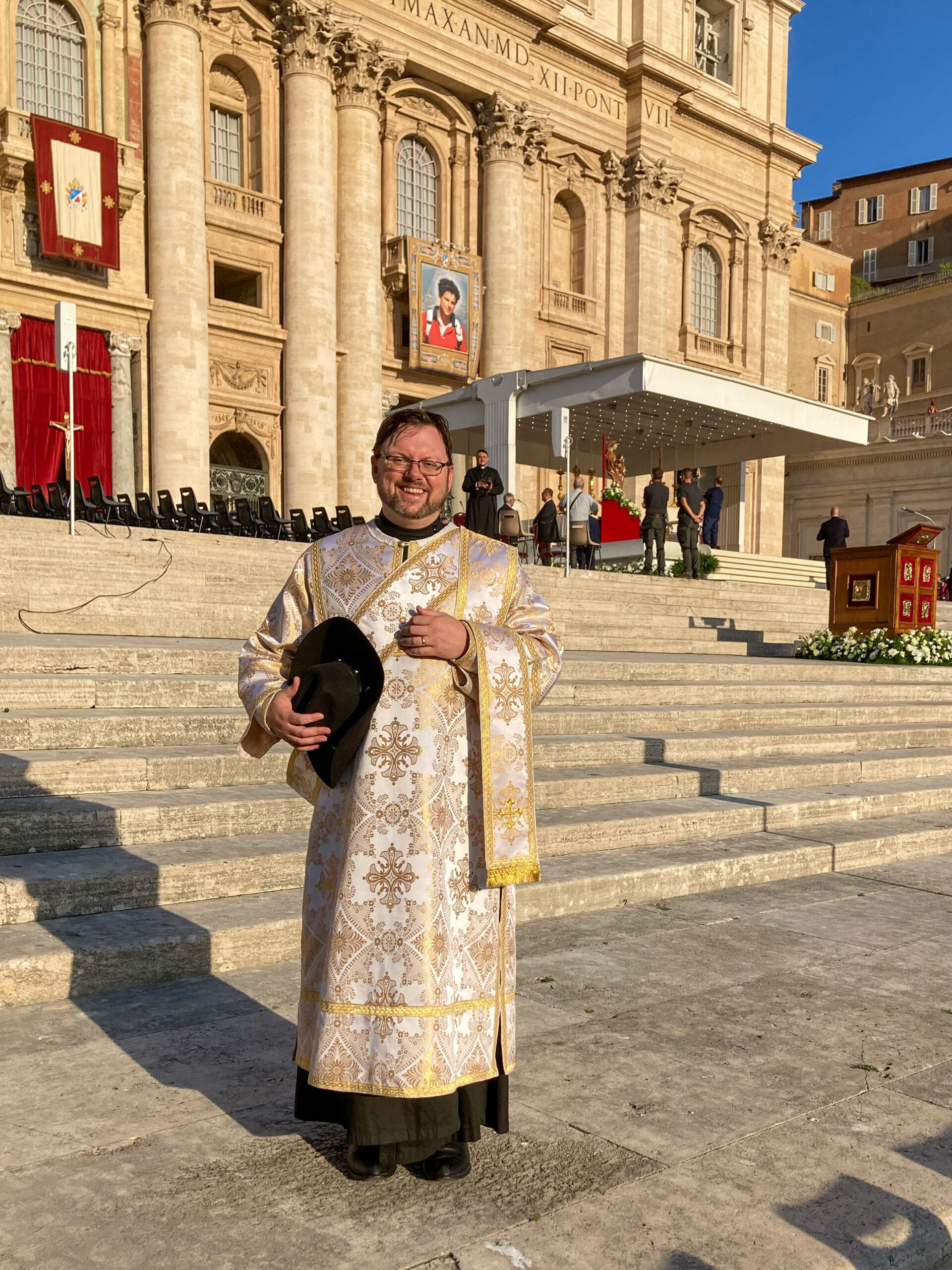 Take Saint Carlo’s intentional moderation in his use of technology. Though he died in 2006, shortly before the smart phone emerged on the scene (and a year before Wyoming Catholic was founded), he recognized the siren call of the digital realm and intentionally restricted his use of the Internet and video games to less than 2-hours-per-week, making him the (informal) patron saint of fasting from technology to allow for its prudent use. And Saint Pier Georgio’s life as an avid mountaineer and athlete was a testament to the power and importance of the outdoors. His personal motto, Verso l’alto (“To the heights”), which he famously scrawled on the on the back of a mountaineering photograph, underscores the ability of young people to find God through experiencing Him in His “First Book,” the Book of Nature.
So, we had the “outdoor saint” canonized alongside the “technology fast” saint, inviting the youth of the world to fast from technology and enter into the wilderness as essential parts of being renewed in holiness.
It’s hard for me to imagine a more Wyoming Catholic College-themed event than that.
As we begin our newest academic year, we are honored and eager to welcome the Class of 2029 into the Wyoming Catholic College family. These forty-six young men and women mark a 15% increase over last year’s Freshmen class, and we can’t wait to share our unique educational community with them.
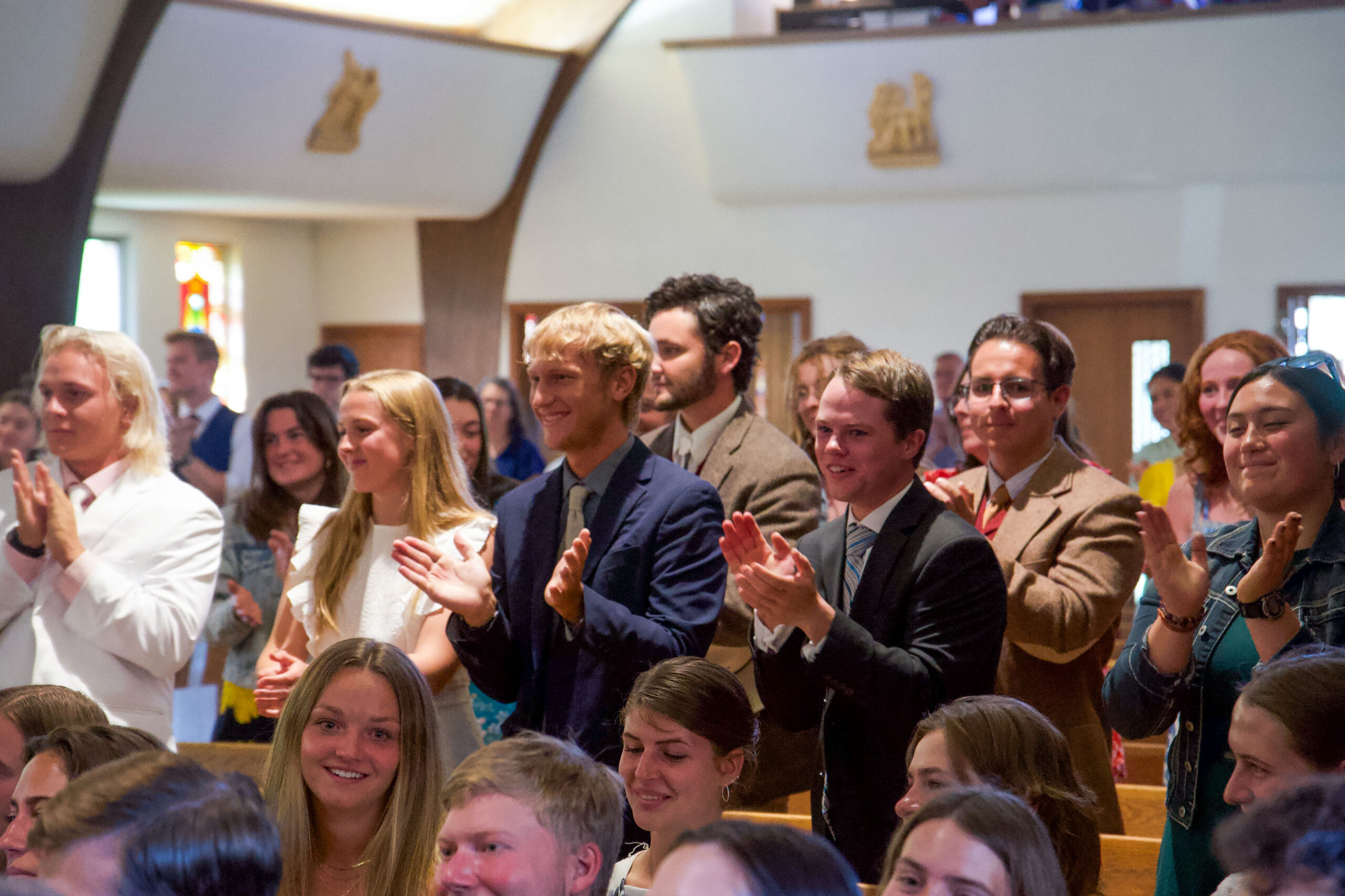 As you can imagine, creating and supporting a community like ours—a community of rich, deep friendships, of challenging yet fulfilling academic study, of beautiful liturgies and gorgeous outdoor settings—is a constant challenge. Our technological society grows increasingly obsessed with the ease and efficiency of these digital advances, but such efficiency and ease come at a great cost. The world’s young people search desperately for sincerity and beauty, finding instead a realm filled with anxiety and false promise.
Our counter-cultural approach is bearing great fruit, as our graduates are confronting the challenges that face us all. But our refusal to “go with the flow” of our modern, technocratic society and the broken system of American academia means that we are greatly dependent on the support of friends like you—friends who recognize the great promise and the shining, hopeful future of our students and graduates, despite the world’s attempts to tell you otherwise.
Please consider a gift in support of Wyoming Catholic College and the forty-six young men and women who joined us this Fall. Over the course of their four years with us, immersed in this extraordinary community, they will grow into the faithful, joyful, adventurous leaders our world so desperately needs. Please make a gift today by visiting www.wyomingcatholic.edu/give. And please be as generous as you can.
Through the prayers of Sts. Pier Giorgio Frassati and Carlo Acutis and through your generous support, may the work of Wyoming Catholic College continue to flourish, and may we continue to offer the saving mysteries of Christ to our students. Strengthened by what they learn here in Lander and galvanized by the great call to holiness that they have received—a call they hear all the more clearly through their fasting from digital distraction and experiencing the Lord in the wilderness—I know that they will go forth to transform and to sanctify our broken world.
In Christ,
Fr. Dcn. Kyle Washut, President
(307) 335-4214 • kwashut@wyomingcatholic.edu
P.S A recording of Dean Olsson’s remarks can be heard HERE, and Fr. Dcn. Kyle Washut’s homily from the Convocation Mass, which touched on many of the same topics as Dr. Olsson’s reflections, can be found HERE.