“Capitol Alumni:” Joseph and Lizzy Collins and Life On the Hill
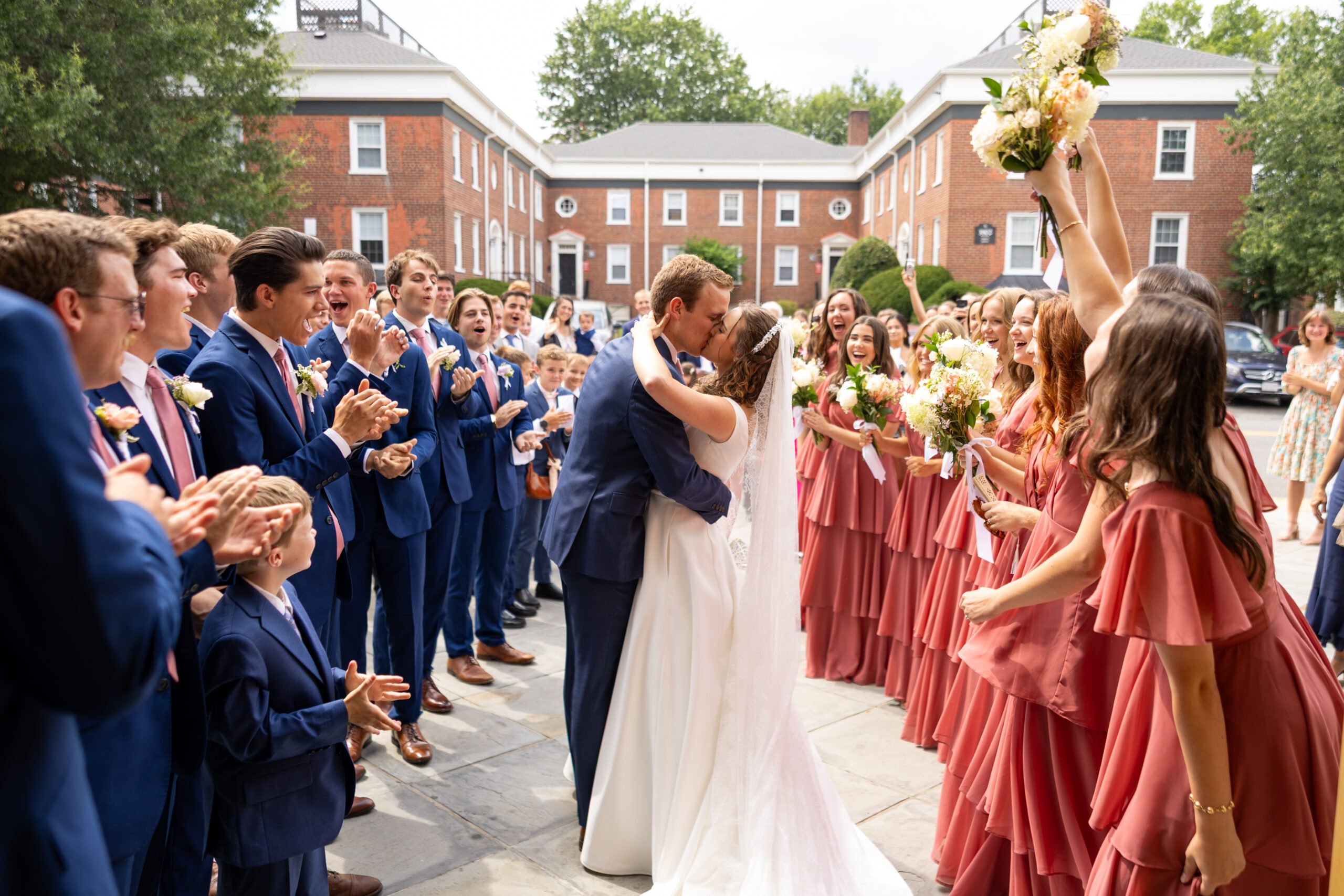
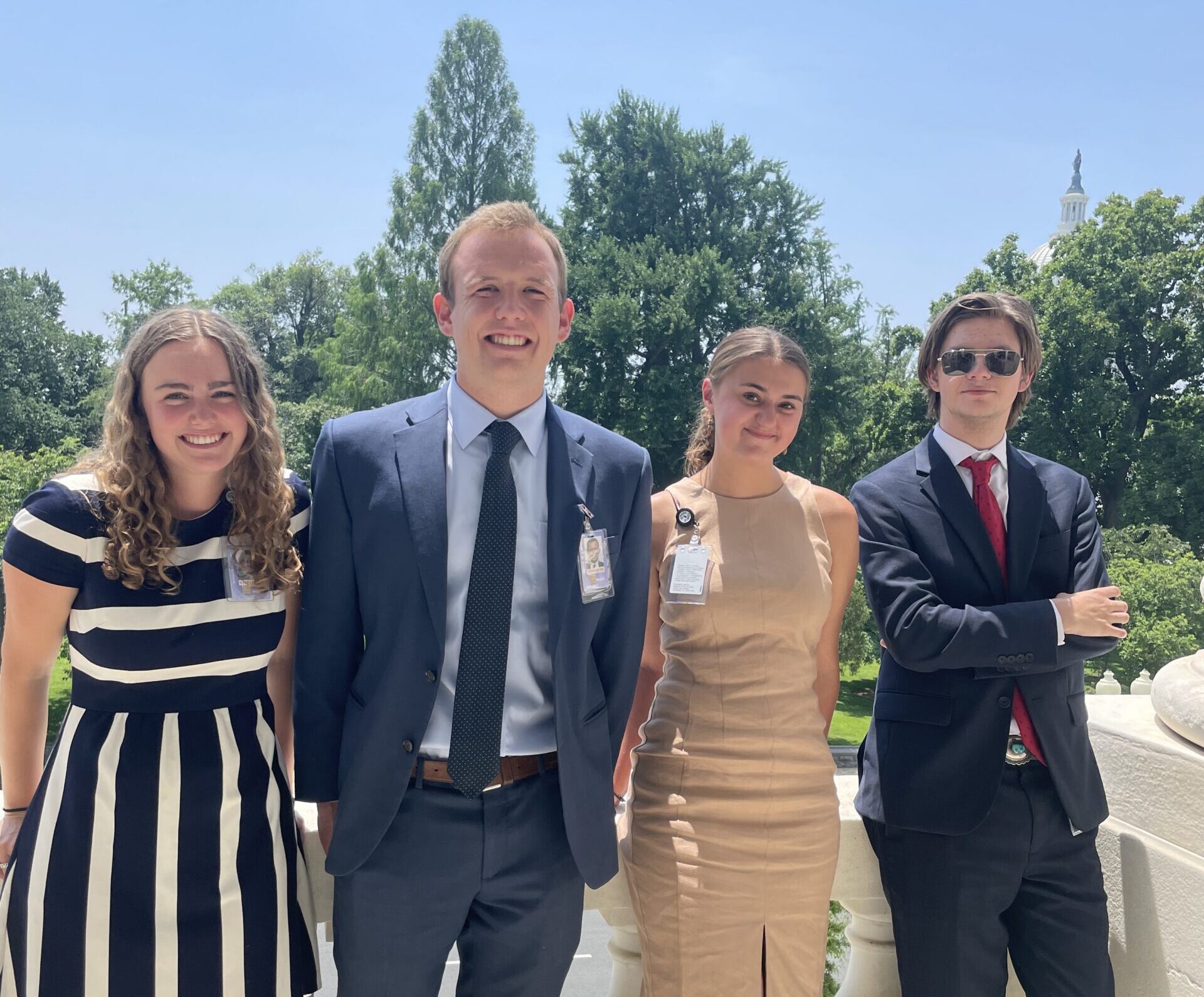
When Virginian Lizzy Eckel and Californian Joseph Collins met at Wyoming Catholic College as freshman to prepare for a 21-day trek in the wilderness, an onlooker might have found it hard to envision them a few short years later influencing the policy and law of the United States. Yet so it played out! Today, as a newly married couple expecting their first child, alumni Mr. and Mrs. Collins have both served as Senatorial aids and now continue to influence the course of decisions in the Capitol. Joseph Collins works for the James Wilson Institute in Old Town Alexandria, just outside of DC, a non-profit that specializes in applying natural law to legal theory. His wife Lizzy is currently a Staff Assistant for Senator Jim Risch (R-ID).
Joseph recalls that he has known of WCC “for as long as I could remember”. His father, a tutor at Thomas Aquinas College, had taught current Wyoming Catholic professors in their own undergraduate years, and Joseph had older siblings who attended WCC. For Joseph, “When it came time to commit to WCC, the main factor was the outdoor program.” For Lizzy, WCC stood out to her as “an authentically Catholic community” and she wanted to challenge herself with the outdoor program and the tech policy. “The tech policy turned out to be not so much a challenge as a huge gift that I miss every day!”, she says, adding that “the Wyoming landscape is hard to beat – definitely better than the Northern Virginia swamp!”
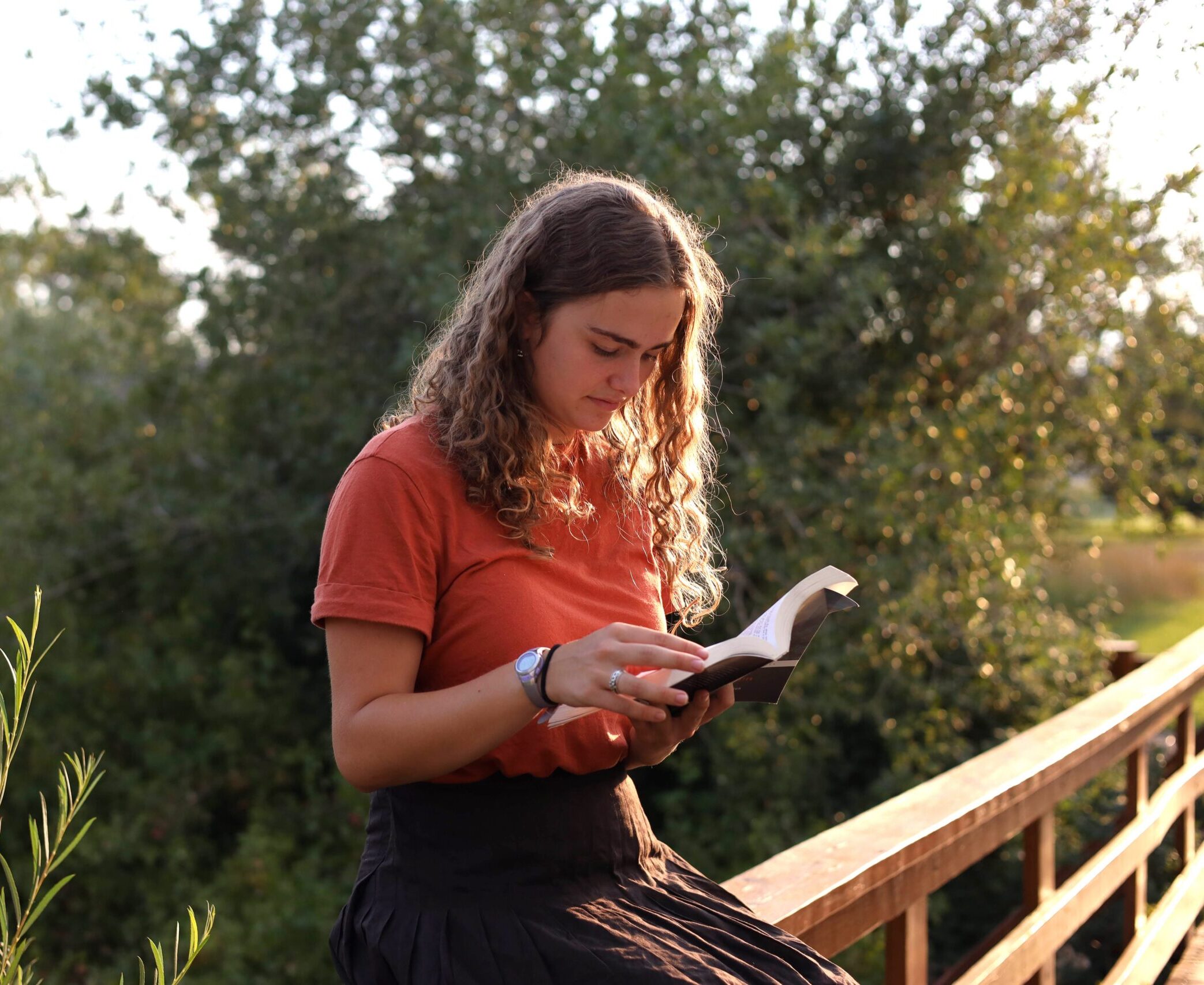 “I can’t pin down just one or two favorite memories of the college,” Lizzy says. But her most intense ones always seem to “revolve around spending time with the amazing friends I made at WCC.” Going through the education and outdoor program with classmates “forges bonds in a way that I have never experienced before, and I am so grateful to come away from my time with many friends that I am confident will be in my life forever.” She especially misses the live folk music culture of the students. “There’s nothing like making music with your friends!”
For Joseph, his favorite moments include the written essays of finals week at Wyoming Catholic. “Perhaps ironically, the different finals week across my four years were some of my favorite moments at WCC. Especially humanities and theology, the written final essays gave me a chance to bring the whole semester into focus and understand the relations between the readings, and from there understand how the semesters related to each other.” He recalls that it was always a bitter sweet moment because “I knew rereading the work would not be the same but I enjoyed their resolution and tying them into the canon as a whole.”
 When they look at what formed them most, Joseph emphasizes the integration of the community. “I could discuss a reading at breakfast, go to the class on that reading, then reflect on its relation to the liturgical year at Mass, and then go discuss it again at lunch! Living, eating and praying together with my classmates and all the other classes brought the readings out of the classroom and into everyday life.”
Lizzy recalls that every outdoor trip pushed her further and further: “Each trip I was more and more amazed at what myself and my peers were capable of. It was very formative for me to have to always push myself past my comfort zone in the outdoors, whether that be staying out for 21 days straight, pushing myself up a mountain peak, or trusting my feet to stick to a wall 40 feet high in a canyon slot.” She says those trips definitely prepared her mind to approach intimidating experiences post-grad, “whether that be in a job interview or in preparing for motherhood.”
But, you might ask, how did Joseph and his wife get from the backwoods of Wyoming and the whiteboards of Lander classrooms? Joseph had worked in DC over the summer after graduation, interning in Wyoming Senator Cynthia Lummis’ office. “I was connected to the Senate job through Mr. Susanka, the College’s Vice President of Advancement, and I was moving out to northern Virginia already.” Joseph explains: “The western states’ senators have a smaller population to staff their offices with, so that was a leg up for me. My experience writing an advisory speech for rhetoric class was a huge help in researching and speaking clearly about political issues, something I put into practice working with staffers on projects.” Another he found helpful was the fine arts and humanities classes. “Most people say that the American founding was heavily protestant, but I believe it was also profoundly classical, and that is reflected in the architecture and art of both the capitol and D.C. In general.”
Thus he made his way to the James Wilson Institute through the typical Hill to “Hill-adjacent” pipeline. “I didn’t particularly want to work with politicians,” Joseph says. “I quickly learned that a lot of work is presented by politicians who have something to campaign on but drafted by staffers behind the scenes. I enjoyed in a very small way influencing political decisions in this framework. In my current job, I have moved out of D.C. And into a much more impactful and less overtly political area.” Reflecting on how his perceptions have change since undertaking this work Joseph explains that before his “work at the senate, I didn’t realize how much the U.S. truly is a republic which sounds funny to say. But after going to some floor speeches and seeing the senators together, I realized how much the U.S. depends on the representation of a vast population by a relatively minuscule group.”
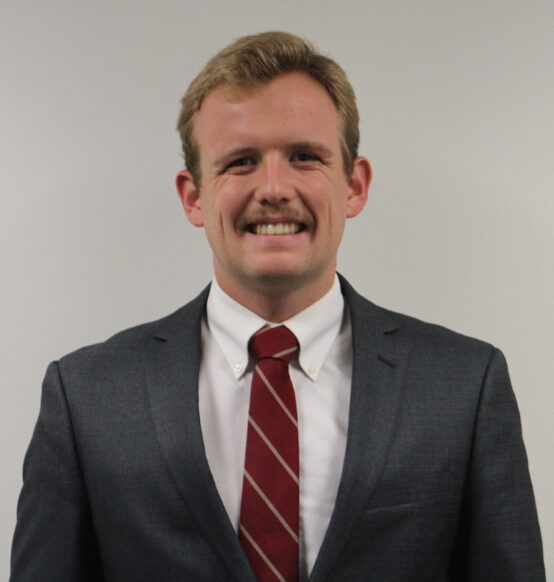 The James Wilson Institute, on the other hand, has drastically changed his view on legal theory. “In highschool, I assumed that textual originalism was the best theory of jurisprudence available, but now I realize how important an understanding of fundamental moral principles is to a proper understanding of law.” Joseph is working for a very small group, which means that he performs a variety of roles, but right now he primarily covers donor and alumni relations. “Coupled with the liberal arts education I received at WCC, I felt pretty prepared to step into pretty much any area that comes my way!”
After graduation, Lizzy also interned for Wyoming Senator Cynthia Lummis. “I really enjoyed the fast pace and learning opportunities that working on Capitol Hill provided, and realized that I wanted to stay for a while.” She was able to find a permanent position with another Western Senator, Jim Risch (R-ID), and has “really enjoyed it so far.” Her duties primarily involve running the front office for his personal office in DC. “I answer phone calls from constituents, receive staff meetings as well as the Senator’s meetings, and process flag requests for constituents. In addition, I have a legislative portfolio that I assist in doing research on and writing constituent letters for.” Lizzy covers issues including, immigration, pro-life, adoption, FEMA, and various projects relating to the arts and humanities (in a “much broader sense than our definition at WCC,” she remarks). Lizzy also helps with brainstorming ideas for legislation and occasionally writes recommendations on whether she thinks the Senator should support an existing bill. “Finally, I help our scheduling team with handling declining events and meetings that the Senator is unable to attend, as well as keeping his calendar clean and organized.”
 Lizzy is originally from the DC area and both of her parents used to work on Capitol Hill, so it was a path that was familiar to her. But she also thought that this more than other jobs would be a place where she could apply her liberal arts education: “drafting ideas for legislation requires critical thinking, and it does really help to have a training in classical political theory. Do I sometimes feel a little disillusioned with the state of our political system after studying what it could or should be? Maybe. But, I’m happy to be working with a group of people who constantly challenge me to find new ways to defend my values and think critically about issues with very real-world implications.”
For Lizzy, who is expecting the couple’s first baby in April, going forward, “motherhood is definitely going to be my top priority in terms of how I spend my efforts and time. I may still do some work in this field or a related field, but my life is going to look a lot different and I’m not going to be coming into the office every day.” But she’s still very excited for this next stage and thinks that she’ll take what she has learned from politics and “have valuable lessons to teach my children when they eventually form their own political opinions.”
“I would say that the liberal arts absolutely will help anyone interested in a political career,” Joseph says. “Something I was told early on in my internship was that technical skills can be quickly taught, while interpersonal ‘soft’ skills have to be learned over a longer period of time. The liberal arts gives the grounding and community to develop “soft” skills to a level where all you need to do is learn light technical skills to be prepared for a plethora of different jobs.” He notes that being able to communicate well either in writing or especially in person is extremely valuable, especially if you “have the attention span that WCC’s tech policy inspires, which is increasingly rare.”
“The liberal education is by far the best background you could have if you are interested in working in politics,” Lizzy says. “It’s not a specialized career—even if people tell you otherwise. All you need is the ability to think clearly, communicate and advocate for your positions well, and most importantly be able to withstand the pressure of the deep state.” She things that Wyoming Catholic alumni are more comfortable than most when they stand out or don’t conform to those around them. “You need this in DC, when there are heavy pressures on both sides to think a certain way and adhere to party lines. A clear thinker who doesn’t conform will make waves.”